
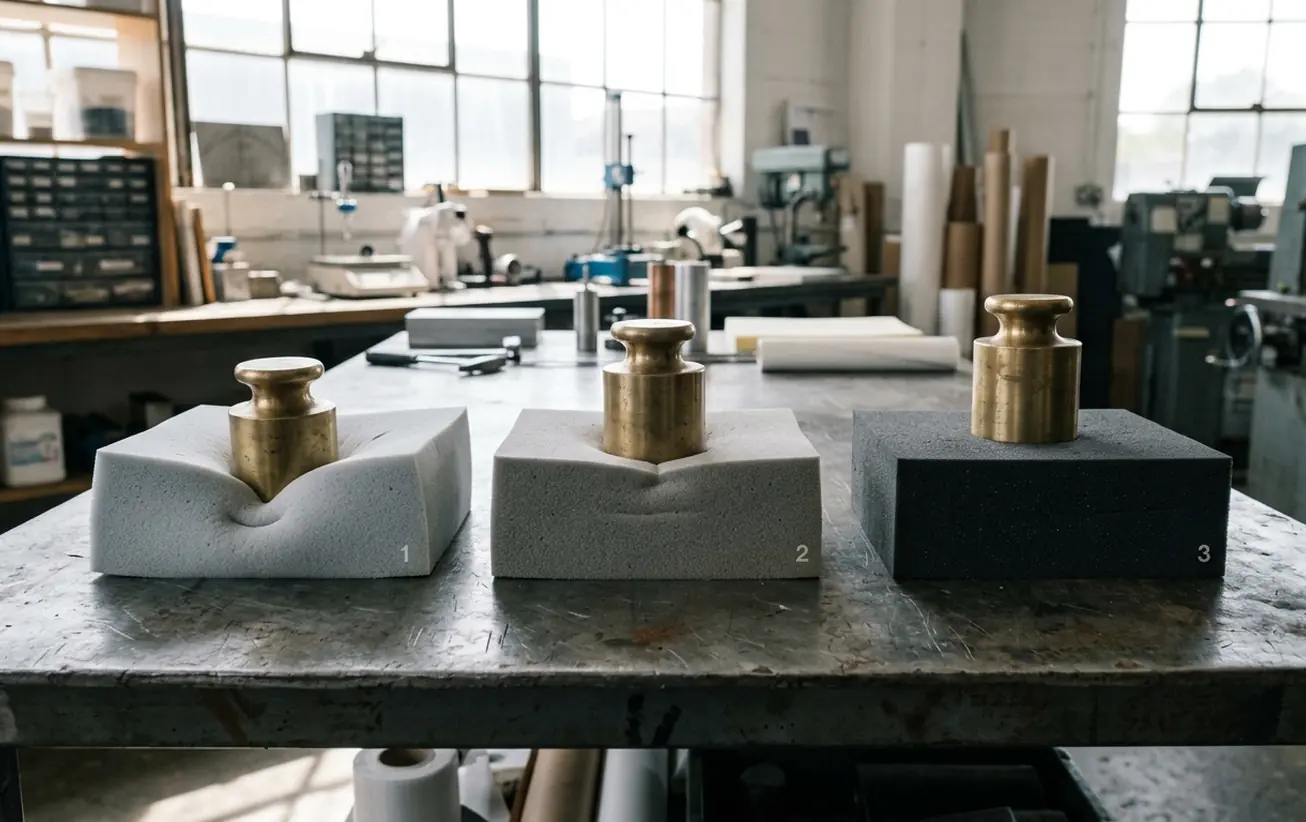
Shopping for a memory foam bed by a single comfort number often leads to expensive mistakes in the bedroom. A mattress rated 6.5 out of 10 on a retail product page behaves very differently under a 115-pound side sleeper than it does under a 240-pound back sleeper, and thermal response in viscoelastic materials means the surface you feel during the first thirty seconds of lying down changes significantly twenty minutes later.
Contents
- What the 1-to-10 Mattress Firmness Scale Actually Measures
- How Body Weight and Sleep Position Shift the Numbers
- Why Medium-Firm Means Different Things Across Brands
- Trade-Offs of Shopping by Numerical Comfort Scales
- When a Mattress Topper Can Fix a Firmness Mismatch
What the 1-to-10 Mattress Firmness Scale Actually Measures
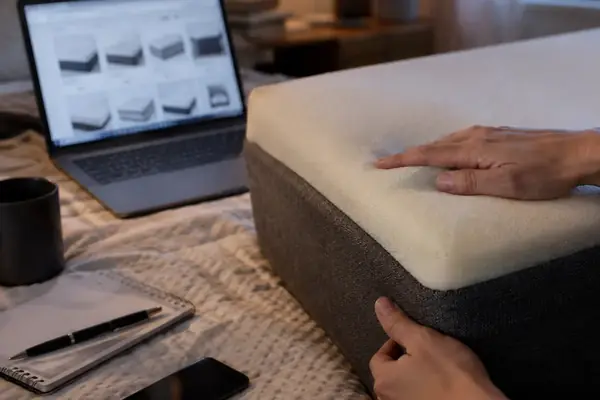
Mattress firmness is a subjective measurement of immediate surface pushback and comfort layer compression, rated on a 1-to-10 scale where 1 represents the softest possible feel and 10 represents an unyielding slab. Most mattresses sold in the consumer market cluster between 4 (medium-soft) and 8 (firm).
Evaluating a sleep surface requires separating surface firmness from deep structural support. Firmness describes how the top comfort layers—such as gel-infused memory foam or copper-infused memory foam—yield to initial point pressure at the shoulders and hips. Support describes how effectively the dense underlying core keeps the spine aligned on a flat horizontal plane. In a randomised controlled trial on mattress firmness and chronic low-back pain, sleepers using medium-firm mattresses reported better pain disability outcomes than those on overly hard surfaces, demonstrating why surface yield and core spinal hold must work together.
To evaluate surface yield independently from deep spinal alignment, product testers log two separate readings: an initial tactile impression during the first 30 seconds of lying down, and a secondary spinal alignment check after 15 to 20 minutes once body heat has fully relaxed the viscoelastic cells. Spinal alignment checks measure whether the lumbar curve deviates by more than half an inch from a neutral horizontal axis.
Memory foam complicates any single-number rating because viscoelastic polyurethane foam requires 12 to 18 minutes of continuous contact with a 98.6°F human body to reach maximum thermal compliance and settle to its true baseline firmness. A bed that feels like a rigid 7.5 when you first sit on the edge often melts into a contouring 6.0 once your body heat penetrates the top cellular layers.
How Body Weight and Sleep Position Shift the Numbers
A 6/10 mattress frequently feels rock-hard to one person and way too soft to their partner because perceived firmness depends entirely on downward force and surface area distribution. When mapping perceived firmness across body types, our testing team assembled a panel spanning three weight brackets to measure vertical hip and shoulder displacement on a standard 6.5/10 mattress using laser level lines.
Sleepers under 130 lbs typically compress a standard medium-firm comfort layer by only 0.75 to 1.25 inches, leaving the underlying transition foam completely unengaged. Because they barely sink into the plush upper material, a standard 6.5 bed registers closer to a 7.5 or 8 in practice.
Conversely, sleepers over 230 lbs frequently compress 2 to 3 inches of low-density plush top foam within a minute or so, bottoming out directly against the high-density 1.8 lb/cubic foot polyfoam support core. When a heavy sleeper blows straight through a soft top layer and hits the rigid base, a mattress advertised as plush or medium can paradoxically feel hard and punishing at the pressure points, or dangerously unsupportive if the hips sink deeper than the ribcage.
Sleep posture alters pressure concentration just as dramatically. Side sleeping concentrates all body mass onto the narrow surface areas of the deltoid and greater trochanter, requiring deeper compression to prevent numbness. Back and stomach positions spread weight across a wider plane, requiring stiffer resistance under the pelvis to stop the lower back from arching.
| Sleeper Weight Class | Primary Sleep Position | How a Standard 6.5/10 Feels | Ideal Target Firmness Scale |
|---|---|---|---|
| Under 130 lbs | Side | Firm (7.5 - 8.0) with high shoulder pressure | 3.0 - 4.5 (Soft to Medium-Soft) |
| Under 130 lbs | Back / Stomach | Medium-Firm to Firm (7.0 - 7.5) | 5.0 - 6.0 (True Medium) |
| 130 to 230 lbs | Side | True Medium-Firm (6.5) | 5.0 - 6.0 (Medium) |
| 130 to 230 lbs | Back / Stomach | True Medium-Firm (6.5) | 6.0 - 7.5 (Medium-Firm to Firm) |
| Over 230 lbs | Side | Soft (5.0) or bottoms out against hard core | 6.5 - 7.5 (Medium-Firm with thick transition layer) |
| Over 230 lbs | Back / Stomach | Too Soft (4.5 - 5.0) with pelvic sinkage | 7.5 - 8.5 (Firm) |
Why Medium-Firm Means Different Things Across Brands
Two mattresses both labeled 6.5 out of 10 by competing manufacturers often feel completely different in person because no universal regulatory agency standardizes consumer comfort scales. Brands calibrate their 1-to-10 charts against their own internal catalog rather than an industry-wide benchmark.
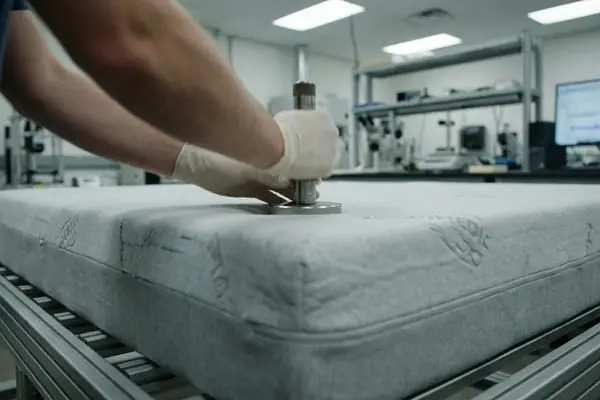
In manufacturing plants, engineers measure foam stiffness using an objective metric called Indentation Load Deflection (ILD). Standard ASTM D3574 testing measures ILD by pressing a 50-square-inch circular presser foot (8 inches in diameter) 1 inch deep into a 4-inch-thick foam sample and holding it for 60 seconds before recording the pound-force. Memory foam comfort layers typically measure between 10 and 16 ILD, whereas polyfoam support cores start at 28 to 36 ILD.
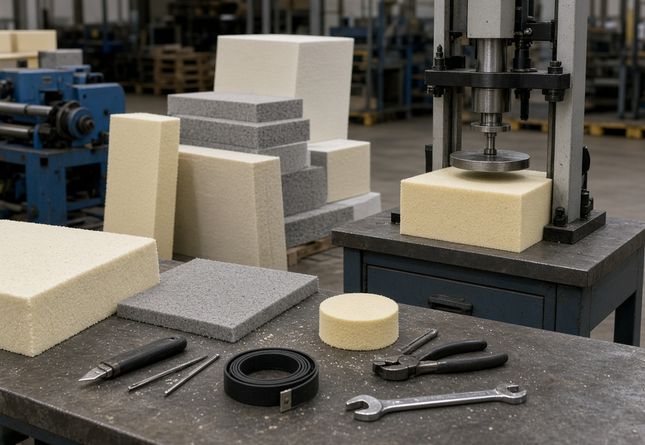
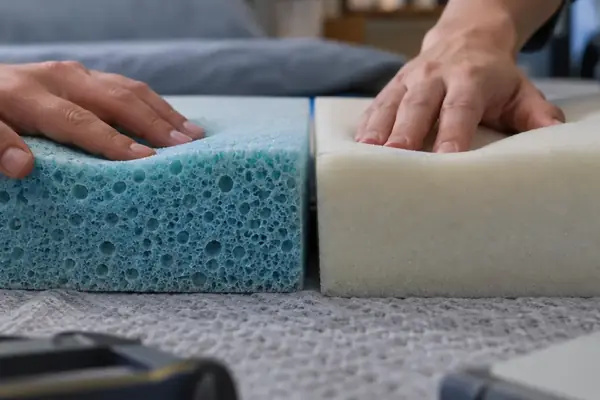
We initially attempted to standardize brand ratings by measuring the raw Indentation Load Deflection (ILD) of extracted comfort layers alone, but rejected that approach after realizing that outer fabric tension and multi-layer stacking altered whole-mattress feel by up to two full scale points. A 12 ILD gel-infused memory foam layer glued atop a 36 ILD base feels noticeably firmer than the exact same 12 ILD top layer resting on a 20 ILD transition foam.
Encasement textiles distort the numbers further. Switching from a four-way stretch-knit polyester cover to a tightly woven organic cotton damask cover can add surface resistance roughly equivalent to a few ILD points. That creates a tight drum-skin effect that prevents your shoulders from sinking into the underlying copper-infused memory foam, even if the raw foam slab inside is chemically identical to a softer competitor's model.
Trade-Offs of Shopping by Numerical Comfort Scales
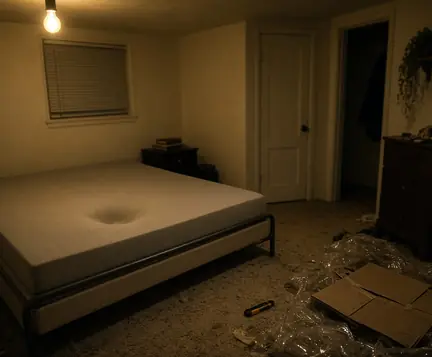
When compiling online buyer feedback against product testing results, researchers cross-referenced return reasons with advertised comfort ratings to isolate which mechanical traits the 1-to-10 number fails to communicate. High-density viscoelastic foams (5.0 lbs/cubic foot and above) take several seconds to recover their flat shape after weight is removed, creating a sensation of movement resistance that a static 6/10 rating never reflects.
Furthermore, brand-new beds fresh out of compressed shipping boxes rarely match their advertised number on night one. New cellular polymers require a break-in period of 21 to 30 nights of regular use for microscopic cell windows to burst open and soften to their advertised showroom feel.
✓ Pros
- Filters out extreme posture mismatches immediately, preventing a strict stomach sleeper from accidentally ordering a 3/10 ultra-plush bed online.
- Provides reliable relative comparisons when evaluating two or three different models built by the exact same manufacturer.
- Gives couples a shared baseline vocabulary when negotiating between a plush top and a firmer hybrid build.
✗ Cons
- Masks slow viscoelastic recovery speed, perimeter edge collapse, and heat retention properties across competing foam formulations.
- Creates false equivalencies when shoppers compare a 6/10 from a budget all-foam brand against a 6/10 from a luxury orthopedic line.
- Ignores the 21-to-30-night cellular break-in period, leading buyers to initiate premature returns during the first two weeks.
When a Mattress Topper Can Fix a Firmness Mismatch
Deciding whether to fix the wrong firmness rating with an aftermarket memory foam topper or initiate a full mattress return comes down to a strict one-way mechanical rule: you can easily make a hard bed softer, but you cannot make a soft bed firmer.
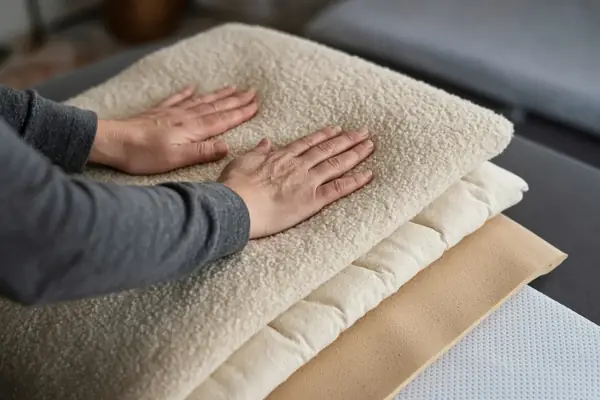
When a mattress is supportive and flat, adding a 2-inch memory foam topper rated at 12 ILD softens an overly hard bed by roughly 1.5 to 2 points on the 10-point scale, while a 3-inch topper shifts the feel by 2 to 3 points. The plush viscoelastic layer introduces a fresh pressure-relief buffer right under your joints while relying on the unyielding mattress below to maintain horizontal spinal alignment.
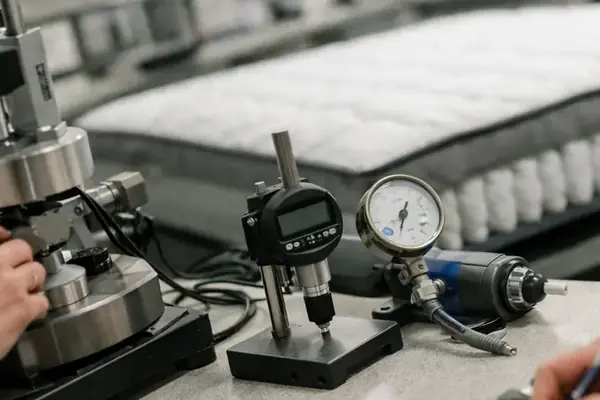
Before recommending an aftermarket modification, evaluators place a rigid yardstick across the sleep surface and measure unloaded structural dip to verify whether the core can physically hold an added comfort layer flat. Adding a firm foam topper cannot salvage a mattress that is already too soft or displays an unloaded surface dip greater than 0.75 inches, because an unanchored pad will simply flex into the underlying cavity and replicate the exact same spinal hammocking. If your bed is too soft or sagging, return the mattress or replace it rather than wasting money on a topper.
Before spending money on new bedding, check your thermostat. Viscoelastic polyurethane foam exhibits a glass transition temperature near 55°F to 65°F (roughly 13°C to 18°C); dropping a bedroom thermostat to 60°F (about 15.5°C) stiffens the polymer chains enough to make a plush 4/10 surface feel like a 7/10 until body warmth penetrates the material.
No comments.