
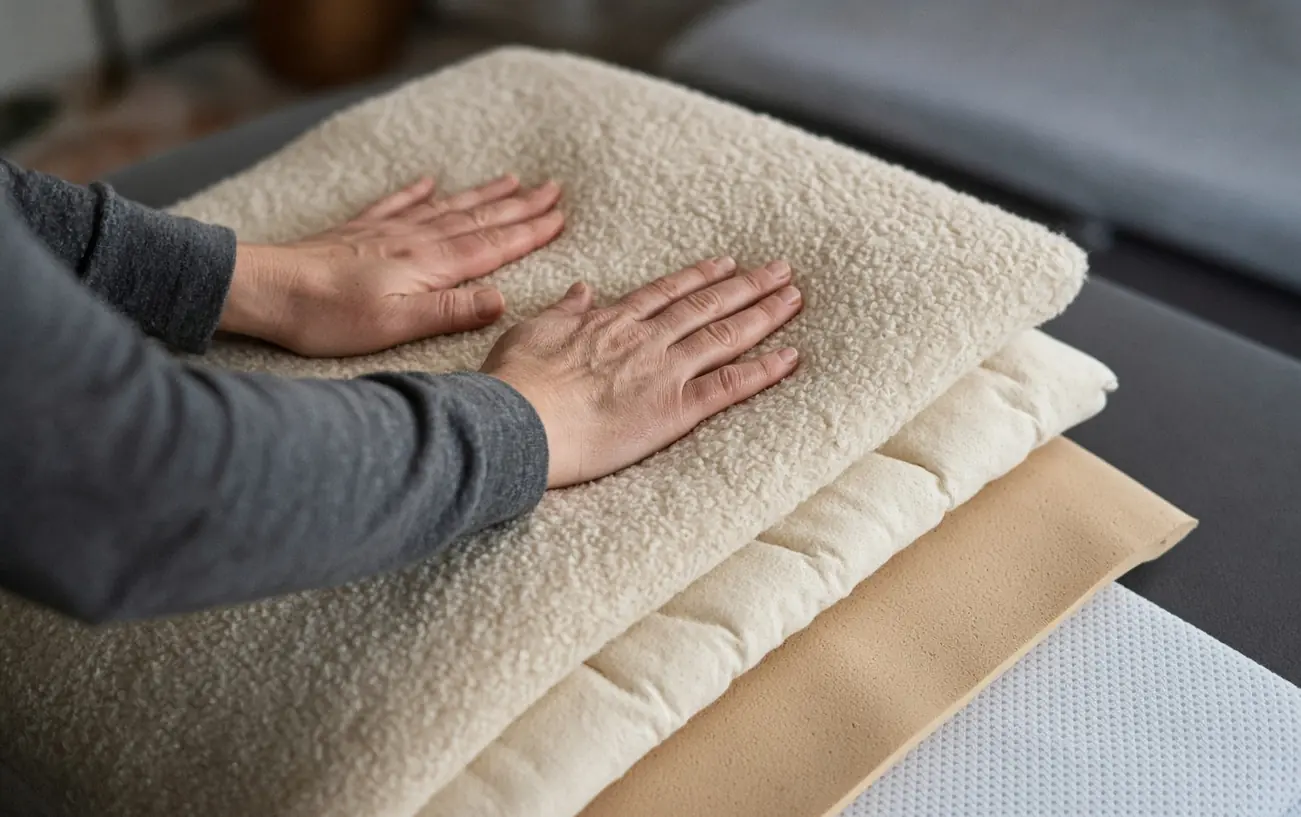
At 3:00 AM in a warm bedroom, a sleeper kicks off heavy sheets after sinking deep into a dense viscoelastic topper that traps body heat around the torso. While we regularly evaluate copper-infused memory foam and gel-infused memory foam advancements, certain thermal profiles and biomechanical needs require stepping away from polyurethane altogether. Natural crimped wool, vulcanized rubber latex, and phase-change material (PCM) textiles handle heat transfer and mechanical load through fundamentally different physical mechanisms.
Contents
- Waking Up Sweating on Viscoelastic Foam
- Structural Profiles of Wool, Latex, and Phase-Change Toppers
- Thickness, Density, and Lifespan Metrics Across Materials
- Matching Topper Mechanics to Body Weight and Sleep Position
- Cleaning Protocols and When an Aging Mattress Cannot Be Saved
- Trade-Offs in Breathability, Cushioning, and Upkeep
- Selecting the Right Non-Foam Surface for Your Bed
Waking Up Sweating on Viscoelastic Foam
Closed-cell polyurethane structures rely on glass transition temperature thresholds—engineered right around human skin temperature (91°F to 95°F),to soften and contour. This thermal softening inherently creates an insulating pocket around the torso that restricts convective airflow. When ambient bedroom temperatures drop below 64°F, viscoelastic foam recovery latency increases noticeably, making the surface feel stiff and unresponsive. Conversely, in rooms at or above 72°F, high-density viscoelastic slabs trap enough radiant heat to trigger mid-sleep awakenings around the 3-to-4-hour mark.
To evaluate non-viscoelastic alternatives objectively, our testing protocol pairs thermal imaging cameras with ambient room sensors during overnight sleeper trials. Logging microclimate heat accumulation beneath the sheets reveals the tipping points where polyurethane restricts air movement. Even when formulations incorporate gel-infused memory foam beads or conductive particles, the underlying cellular matrix slows rapid air exchange and exhibits delayed rebound when a sleeper changes position.
Sleepers who change positions frequently or generate high nocturnal heat often need materials that respond instantly to weight shifts and breathe passively. Wool batting, natural or blended latex cores, and phase-change fabrics address heat buildup and surface rebound through fiber capillarity, open-cell elasticity, or latent heat absorption.
Structural Profiles of Wool, Latex, and Phase-Change Toppers
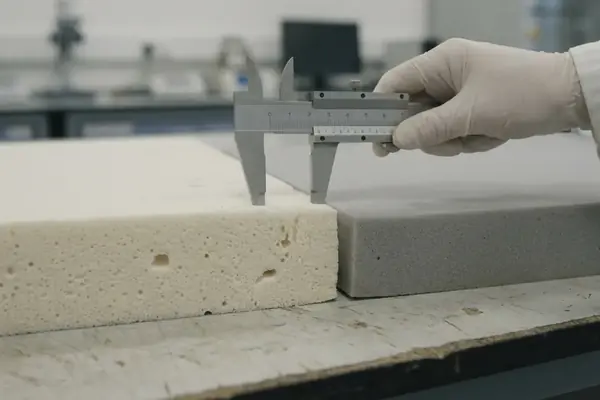
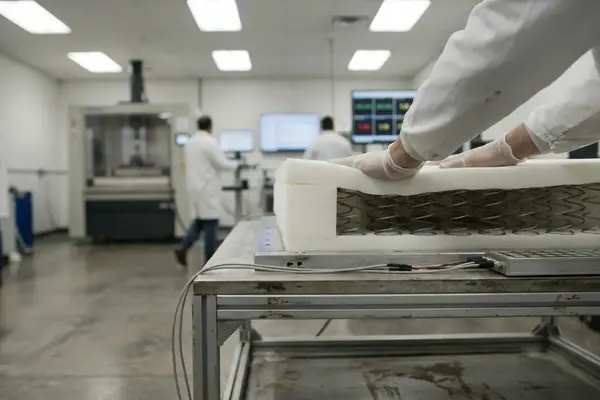
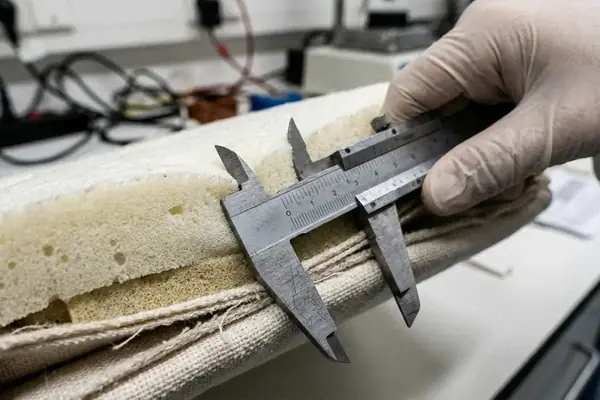
When categorizing topper architectures for our material library, we separate structural elastomers from passive fiber batting and active chemical finishes. Cross-sectioning samples allows us to inspect pinhole aeration geometry in vulcanized rubber and verify whether phase-change treatments are mechanically bonded into the yarn or merely sprayed onto surface tickings. Peer-reviewed thermal comfort and sleep microenvironment research demonstrates that maintaining a stable temperature and humidity zone directly governs sleep continuity.
Crimped Wool Batting
Natural wool fibers possess a microscopic scale structure and three-dimensional crimp that trap pockets of still air while moving moisture. Crimped wool fibers absorb moisture vapor directly into their inner cortex before feeling damp to the touch, buffering humidity spikes inside the bed microclimate. Rebound is minimal; wool yields gently under load and relies on periodic maintenance to restore loft.
Vulcanized Rubber Latex
Derived from liquid rubber sap, latex is moulded with vertical pin-core channels to facilitate bellows-like air movement whenever the sleeper shifts. Talalay latex production incorporates a vacuum-expansion and flash-freezing stage at roughly -20°F prior to vulcanization, yielding a more uniform, breathable cell matrix than the denser, sedimentary pour of standard Dunlop latex. Both types offer immediate elastic rebound.
Phase-Change Textiles
Paraffin-based phase-change microcapsules are typically engineered to liquefy and absorb latent heat within a narrow 82°F to 88°F activation window. Woven into fabric covers or applied as surface coatings, these capsules draw excess warmth away from the skin on initial contact without altering the mechanical cushioning of the underlying foam or fiber core.
Thickness, Density, and Lifespan Metrics Across Materials
During a recent benchmark update, we considered normalizing all topper firmness scores onto a single universal scale, but rejected that approach because dynamic spring rate in vulcanized rubber and static bulk weight in natural batting measure fundamentally incompatible physical forces. Comparing these materials requires looking at how each specification translates to vertical compression depth and long-term structural resilience.
| Material Type | Standard Thickness Range | Firmness / Density Metric | Primary Airflow & Thermal Mechanism | Expected Structural Lifespan |
|---|---|---|---|---|
| Carded Wool Batting | 1.5 to 3.0 inches | 400 to 1,200 GSM (12 to 22 lbs for standard Queen) | Vapor absorption into inner fiber cortex; interstitial air pockets | 3 to 5 years (after initial loft consolidation) |
| Dunlop Latex | 2.0 to 3.0 inches | 14 to 36 ILD (sedimentary denser bottom-half pour) | Vertical pin-core perforation bellows during sleeper movement | 5 to 8 years |
| Talalay Latex | 2.0 to 3.0 inches | 14 to 36 ILD (vacuum-expanded, flash-frozen at -20°F) | Uniform open-cell matrix plus pin-core ventilation channels | 5 to 8 years |
| PCM-Infused Textiles | Surface ticking / cover layer | N/A (dependent on base substrate core) | Latent heat absorption via paraffin liquefaction (82°F–88°F window) | Matches base core (degrades if heated above 120°F) |
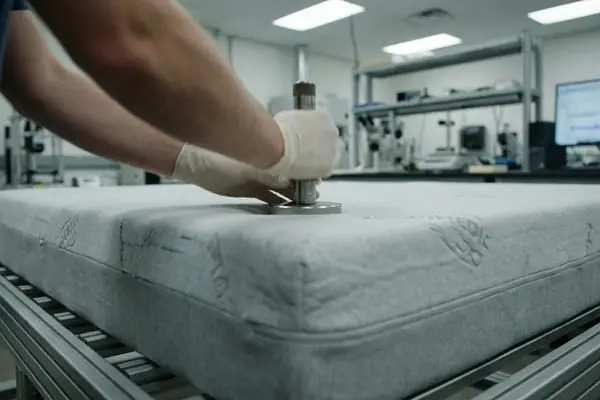
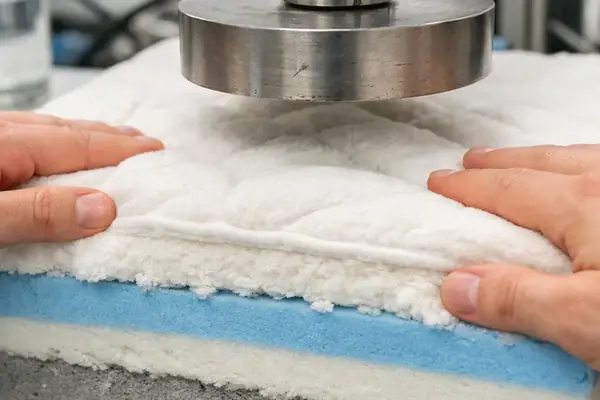
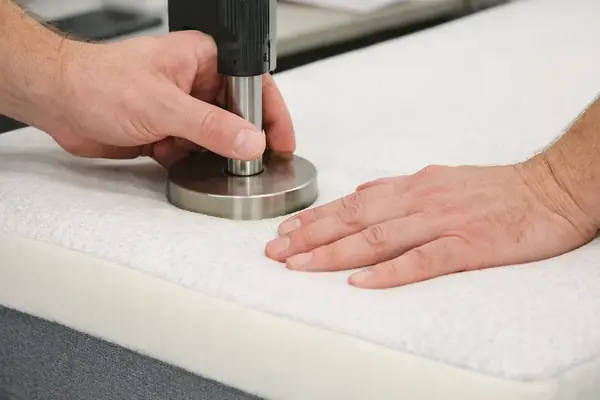
Indentation Load Deflection (ILD) for latex toppers typically spans 14 ILD (ultra-plush) to 36 ILD (firm), measured as the pounds of force required to compress a 4-inch-thick specimen by 25% of its height using a 50-square-inch circular indenter foot. Because wool lacks rapid elastic recovery, testing it with a rigid indenter foot yields misleading numbers. Instead, wool toppers are quantified by areal weight—ranging from 400 to 1,200 grams per square meter (GSM),or total fill weight, which often runs 12 to 22 pounds for a standard Queen footprint.
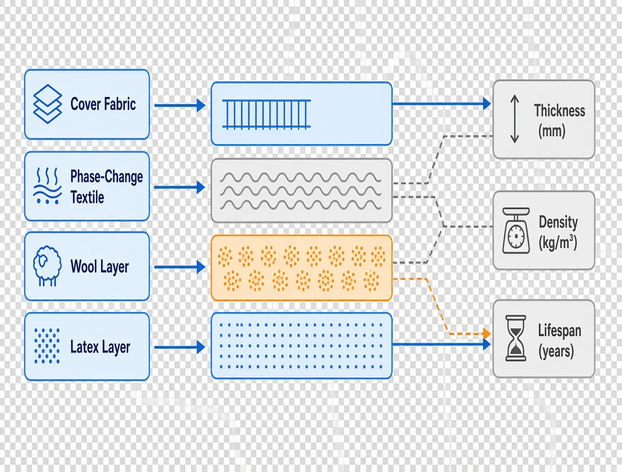
Thickness governs how deeply a topper can alter spinal mechanics. Toppers under 2 inches thick lack the vertical stroke length to isolate prominent bony landmarks like the greater trochanter, serving mainly to soften surface tension. Conversely, 3-inch slabs provide enough compression depth to alter thoracic and lumbar spine angles, which can either relieve deep pressure points or pull the spine out of alignment if the core is too soft for the sleeper's mass.
Matching Topper Mechanics to Body Weight and Sleep Position
Studio load-deflection checks simulate real-world anthropometrics by applying weighted plates shaped like human hip and shoulder contours across a multi-week cyclic compression rig. Tracking both instantaneous bottoming-out depth and unrecovered loft loss after removing the weights reveals distinct performance boundaries across body types.
Heavy Frames and Side Sleeping
Side sleepers concentrate their body mass onto narrow contact zones at the shoulder and hip. Those weighing over 210 pounds exert localized point pressures that bottom out 2-inch soft Talalay (14–19 ILD) or fibrous wool layers, requiring at least a 3-inch medium-firm Dunlop slab (28–32 ILD) to prevent hip contact with the underlying mattress. Because Dunlop latex settles into a denser arrangement during moulding, it pushes back progressively harder the deeper it compresses, keeping heavy joints suspended above a firm mattress surface.
Lightweight Profiles and Prone or Supine Postures
Back and stomach sleepers distribute their weight across a much wider surface area. Among them, people under 130 pounds often fail to compress latex rated above 24 ILD, resulting in upward lumbar pushback unless paired with a thin 1.5-to-2-inch plush layer. For these lighter individuals, a thick, firm topper forces the pelvis upward and hyperextends the lower back. A plush Talalay layer (14–19 ILD) or a fleecy wool pad provides gentle surface conformity without altering spinal curvature.
Account for Wool Compression
Buyers selecting natural fiber pads must anticipate early thickness changes. Carded wool batting experiences rapid initial fiber consolidation during the first 21 to 35 days of nightly use, permanently losing roughly one-quarter to one-third of its out-of-box loft before stabilizing into a denser felt-like pad. A 3-inch wool topper will settle closer to 2 inches once the crimped fibers pack down under torso weight.
Cleaning Protocols and When an Aging Mattress Cannot Be Saved
A topper can soften an overly firm coil bed, but it cannot fix a broken support core. Before purchasing any auxiliary comfort layer to salvage an aging bed, run a simple diagnostic check across the bare mattress.

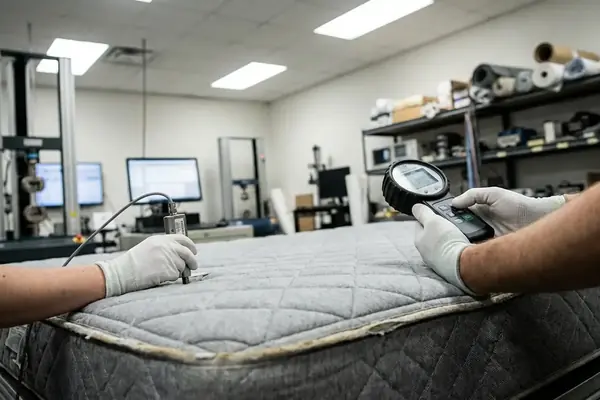
Stretch a taut mason line or non-elastic cord diagonally and laterally across the bare mattress surface; if the vertical gap between the string and the unweighted quilting trough exceeds 1.0 to 1.5 inches, any flexible topper will simply conform to the valley and replicate the ergonomic defect. When structural troughing crosses that threshold, no topper material has the beam strength to bridge the dip.
Once a topper is in service on a structurally sound bed, strict cleaning protocols dictate its survival:
- Keep wool out of washing machines: Agitation in water above 85°F causes microscopic cuticular scales on wool fibers to interlock and ratchet together into an irreversible, dense felt. Spot-clean stains with cool water and air the pad outdoors in indirect shade.
- Shield bare latex from light and heat: Uncovered vulcanized latex exposed to ambient ultraviolet light undergoes photodegradation and ozone cracking within weeks, turning the outer skin brittle and crumbly. Always keep the rubber slab zipped inside an opaque, breathable cotton or bamboo-derived viscose cover, and spot-clean with mild soap only.
- Protect phase-change microcapsules in the laundry: Tumble-drying PCM-treated covers above 120°F ruptures the microscopic polymer shells housing the paraffin wax. Wash removable cooling covers on cold gentle cycles and line-dry them flat.
Trade-Offs in Breathability, Cushioning, and Upkeep
Long-term durability logs alongside chemical sensitivity reports and weekly maintenance overhead from home test panels highlight clear operational trade-offs across these three categories.
✓ Pros
- Latex microbial resistance: Vulcanized latex naturally resists dust mite colonization and mold spores without chemical biocides.
- Wool moisture buffering: Crimped wool absorbs substantial water vapor directly into its inner cortex, keeping the skin dry during humid nights.
- Instant elastic recovery: Pin-core Talalay and Dunlop latex rebound immediately when you roll over, eliminating the stuck-in-the-mud sensation of slow-recovery viscoelastic foam.
- Cool initial touch with PCM: Paraffin microcapsules actively draw heat away from the skin within the 82°F to 88°F activation window as you fall asleep.
✗ Cons
- Early wool loft loss: Carded wool batting loses 25% to 33% of its initial thickness during the first 21 to 35 days of compression.
- High wool rotation upkeep: Users must rotate loose-fill or batted wool toppers 180 degrees head-to-foot and flip them every 14 to 21 days during the first few months of ownership to maintain homogeneous loft.
- Initial latex odor: Residual rubber proteins require thorough post-vulcanization washing to minimize off-gassing odors during the first 72 to 120 hours after unsealing.
- Finite PCM cooling window: Phase-change coatings exhaust their latent heat capacity after 20 to 45 minutes of continuous skin contact.
Selecting the Right Non-Foam Surface for Your Bed
When ranking structural longevity and spinal mechanics above transient showroom sensations, vulcanized rubber stands apart from fiber batting and chemical fabric treatments. While copper-infused memory foam remains an option for sleepers who want slow-melting viscoelastic contouring, buyers moving away from foam need a material that holds its calibration year after year.




No comments.