

The Evolution of Modern Mattress Construction
Material engineers did not originally design viscoelastic foam for sleep. They adapted aerospace cushioning for consumer use by systematically lowering the polymer density to achieve a balance between pressure relief and room-temperature pliability. This created a material that contoured perfectly to the human body—though early iterations trapped heat and collapsed at the edges.
The hybrid mattress emerged as a direct engineering response to these limitations. By replacing the dense polyurethane core with a steel coil system, manufacturers introduced mechanical airflow and perimeter reinforcement. Today, both constructions utilize advanced materials. The choice between them relies entirely on individual sleep mechanics rather than a universal standard of quality.
Defining the Core Architectures
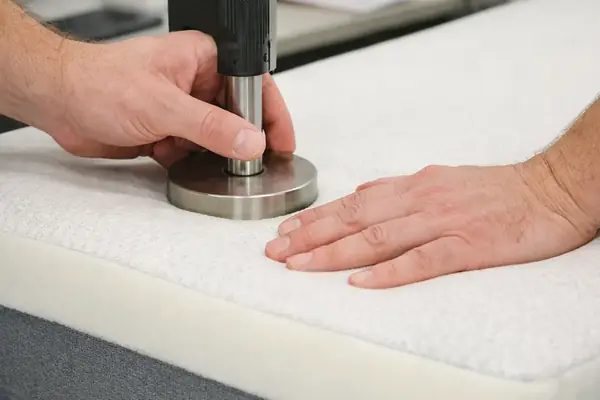
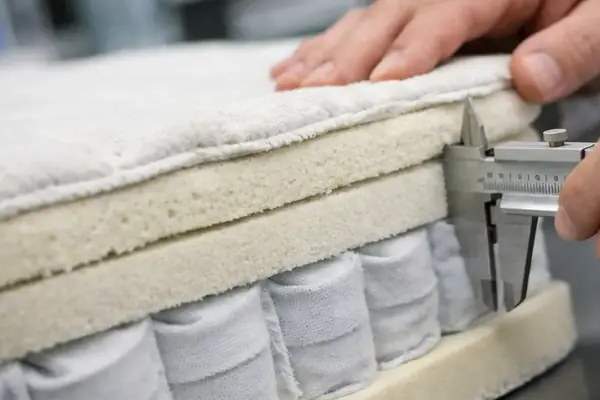
Manufacturers determine the architectural sequence of an all-foam mattress using strict density gradients. During structured assessments, the high-density polyurethane base typically ranges from about 1.5 to 2.0 pounds per cubic foot (PCF), establishing a rigid foundation. Above this, they progressively layer lower-density viscoelastic foam measuring roughly 3.0 to 5.0 PCF.
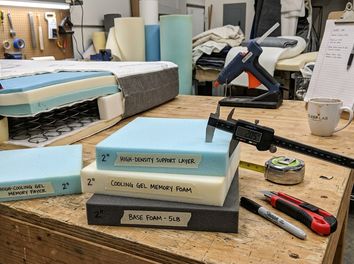
This specific sequence allows the upper layers to contour while the base prevents total sinkage. Hybrid construction replaces that roughly 1.5 to 2.0 PCF polyurethane base with a pocketed steel coil support system, topped with similar memory foam or latex comfort layers.
Industry standards like CertiPUR-US verify the safety and density metrics of modern foams used in models like Loom and Leaf. This ongoing certification process ensures the structural integrity of the upper comfort layers remains consistent regardless of the support core below it.
Side-by-Side Performance Specifications
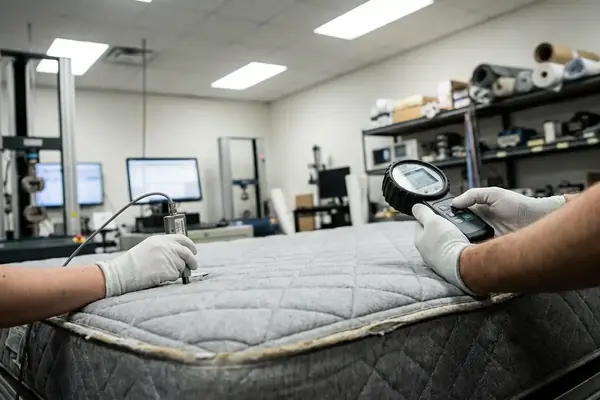
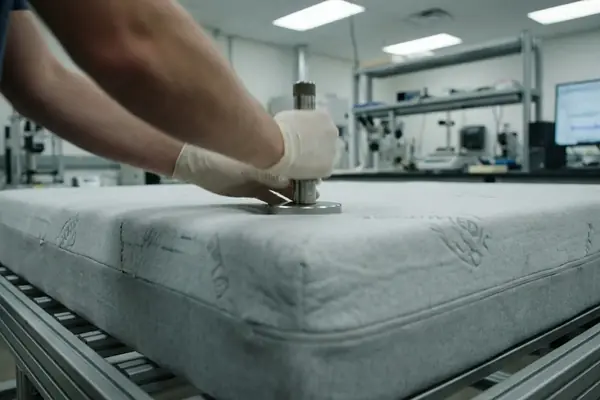
Product testing facilities evaluate motion isolation by dropping standardized weights on one side of the mattress while measuring the vibrational transfer to the opposite side using seismographic sensors. All-foam beds maximize motion deadening in these tests. The absence of springs allows the viscoelastic material to absorb kinetic energy completely, making it ideal for easily disturbed partners.
Hybrids perform differently under the same testing conditions. The coil structure inherently creates a breathable chamber, facilitating passive airflow that solid foam cores lack.
| Performance Metric | All-Foam Construction | Hybrid Construction |
|---|---|---|
| Motion Isolation | Superior (absorbs kinetic energy) | Moderate (coils transfer slight vibration) |
| Temperature Regulation | Poor to Moderate (relies on surface infusions) | Excellent (continuous mechanical airflow) |
| Edge Support | Weak (foam compression) | Strong (perimeter coil reinforcement) |
| Pressure Relief | Excellent (deep contouring) | Good (localized pushback) |
Thermal Regulation and Structural Support
Viscoelastic foam relies on body heat to soften and contour. This thermal dynamic historically traps temperature around the sleeper, directly impacting the thermal environment and sleep quality. Designers initially attempted to solve heat retention by punching vertical ventilation channels directly through solid memory foam blocks. They rejected this approach after testing revealed it severely compromised the structural integrity of the bed.
Current cooling interventions rely on Copper-infused memory foam and Gel-infused memory foam. These surface treatments offer temporal relief, but they cannot match the continuous mechanical airflow of a hybrid's coil system for maintaining an optimal sleep temperature.
Structural support also diverges sharply between the two designs. High-density foam bases provide progressive resistance, pushing back only as the material compresses. Individually wrapped steel coils deliver active, localized pushback the moment weight is applied.
Matching Construction to Sleep Mechanics
Ergonomists map spinal alignment by measuring the sinkage depth of the shoulders and pelvis—though these measurements assume a static sleep posture rather than dynamic movement. These differentials dictate the necessary support structure. Side sleepers require deep pressure relief at the shoulders and hips, often best served by the deep contouring of all-foam or heavily padded hybrids.
Warning: Side sleepers with a BMI shy of 18.5 often lack the physical mass required to activate the thermal contouring properties of high-density memory foam, resulting in surface-level pressure buildup rather than deep relief.
Back and stomach sleepers need lumbar support to prevent pelvic sinkage. The active pushback of hybrid coils generally excels in keeping the spine neutral for these positions.
Key Takeaway: Sleepers weighing just over 230 pounds risk bottoming out on all-foam models and require the structural integrity of a hybrid coil system for proper spinal alignment.Inherent Trade-Offs of Each Design
Reviewers evaluate the inherent design compromises by weighing the inverse relationship between a material's ability to absorb kinetic energy for motion isolation and its ability to provide structural pushback.
All-Foam Construction
✓ Pros
- Superior motion isolation
- Deep pressure relief for side sleepers
- Zero mechanical noise
✗ Cons
- Potential heat retention
- Weaker edge support
- Risk of bottoming out for heavy sleepers
Hybrid Construction
✓ Pros
- Excellent temperature regulation
- Active lumbar support
- Strong edge support
✗ Cons
- Higher weight and cost
- Slight motion transfer
- Potential for mechanical wear over time
Next Steps for Mattress Selection
Retailers structure their sleep trials around the physical properties of the materials. Verify that the manufacturer offers a minimum return window not far from 90 days before purchasing.
Pro Tip: Commit to a material break-in period trending toward 30 days to allow the cellular structure of the foam to soften and the steel coils to settle before assessing comfort.Test the mattress in your primary sleep position during this window to accurately assess spinal alignment and comfort.






No comments.