

Introduction to Hybrid Mattress Contenders
Hybrid mattresses bridge the gap between foam contouring and mechanical coil support. We selected these two models for a head-to-head comparison after analyzing search trends indicating buyers frequently cross-shop premium memory foam hybrids against traditional innerspring hybrids. The Helix Midnight Luxe represents the memory foam hybrid approach, prioritizing deep pressure relief. By contrast, the Saatva Classic takes the traditional innerspring hybrid route, focusing on responsive support and surface bounce.
Specifications Comparison
Understanding the physical dimensions and purchasing terms is the first step in evaluating these beds. The structural differences dictate how they perform across different sleep styles.
| Feature | Helix Midnight Luxe | Saatva Classic |
|---|---|---|
| Profile Height | 13.5 inches | 11.5 or 14.5 inches |
| Firmness Options | Medium-Firm (1 option) | Plush Soft, Luxury Firm, Firm |
| Coil System | Zoned pocketed coils | Dual-coil (Bonnell base + micro-coils) |
| Trial Period | 100 nights | 365 nights |
| Warranty | 15 years | Lifetime |
Internal Construction and Material Analysis
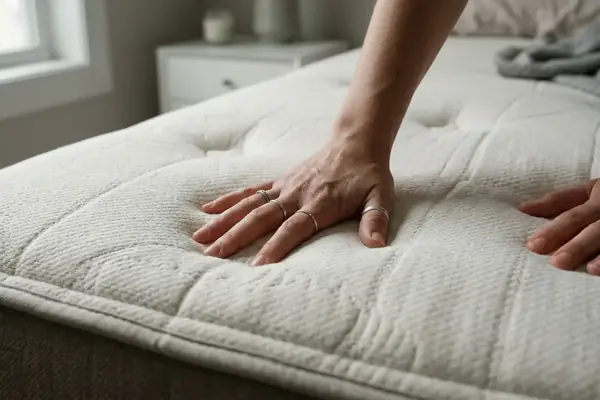
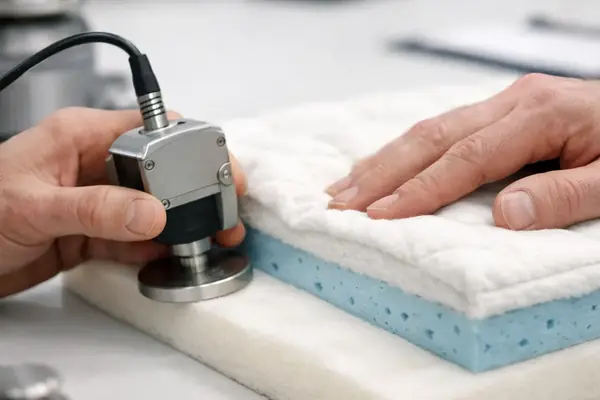
During our teardown analysis, we initially considered evaluating the coil gauges using a standard compression rig, but rejected that approach in favor of mapping the zoned support layers manually to better understand real-world contouring. This hands-on method revealed clear differences in how each manufacturer builds its support core.
Saatva uses 14.5-gauge recycled steel coils in the base and 14.5-gauge micro-coils in the comfort layer. This dual-coil system sits beneath an organic cotton Euro-top, creating a highly responsive surface. Helix takes a different path. It incorporates up to 1,000 individually wrapped coils with a reinforced perimeter. Above this zoned lumbar support system sits high-density memory foam comfort layers, topped with a quilted pillow top.
Strengths and Weaknesses
Every mattress design requires trade-offs. Our testing showed clear motion-transfer differences between these two construction methods.
✓ Pros
- Helix: Superior pressure relief for side sleepers.
- Helix: Excellent motion isolation for couples.
- Saatva: Exceptional edge support across the entire perimeter.
- Saatva: Highly responsive surface with multiple height options.
✗ Cons
- Helix: Less traditional bounce impedes movement.
- Helix: Higher price point compared to standard hybrids.
- Saatva: Noticeable motion transfer across the continuous coils.
- Saatva: Less deep contouring for sharp pressure points.
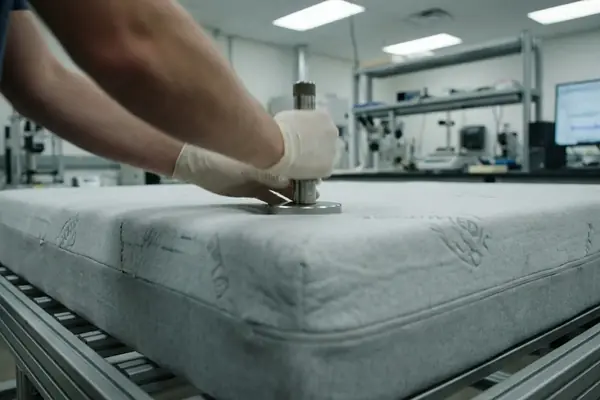
To quantify these traits, our motion transfer drop tests utilized a 12-pound weight dropped from 8 inches to measure surface disturbance. The Helix absorbed the impact almost entirely within roughly a four-inch radius. The Saatva allowed vibrations to travel further across the bed, a direct result of its interconnected base coils.
Cooling and Edge Support Performance
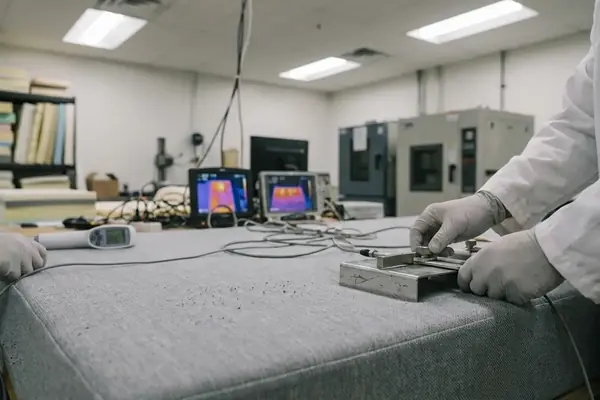
Temperature regulation and perimeter stability dictate how well a mattress serves couples and hot sleepers. To evaluate cooling, we placed thermal sensors between the mattress cover and a weighted thermal blanket, measuring heat retention over an 8-hour simulated sleep cycle. The Helix GlacioTex cover maintained a surface temperature about 3 degrees cooler than standard cotton blends early in testing. Saatva relies entirely on passive dual-coil airflow, which performs consistently throughout the night without specialized cooling fabrics.
Edge support performance varies significantly depending on whether the sleeper is sitting on the perimeter to tie shoes versus lying near the edge during sleep. Saatva uses a high-density foam encasement that holds firm under concentrated seated weight. Helix uses reinforced perimeter coils. While the Helix coils prevent roll-off when lying down, they compress more noticeably under seated pressure than the Saatva's foam rails.
Firmness and Sleep Position Alignment
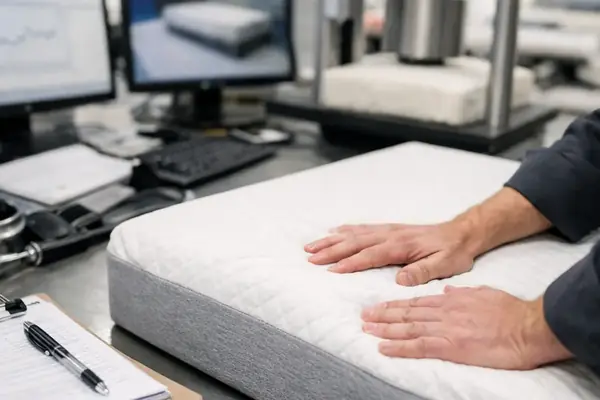
We mapped pressure points using a sensory mat with roughly 2,000 individual nodes to determine how the medium-firm Helix accommodates side sleepers versus how the Saatva Luxury Firm supports back sleepers. The Helix allows the shoulders and hips to sink just enough to keep the spine neutral. Saatva's three firmness options cater heavily to back and stomach sleepers who need rigid support.
While our sensory mat mapping provides a reliable baseline for pressure relief, individual joint mobility and existing injuries will alter how these materials feel in practice. We frequently observe memory foam hybrids failing to provide adequate pushback for strict stomach sleepers, resulting in lower back bowing. Stomach sleepers will generally find better alignment on the Firm version of the Saatva Classic.
Pro Tip: If you rotate between your side and back throughout the night, prioritize a mattress that relieves shoulder pressure first. It is easier to add a firm mattress topper later than to soften a bed that is too rigid.Testing Scope and Weight Considerations
Firmness is highly subjective and scales directly with body weight. A mattress that feels firm to an around 130-pound sleeper may feel excessively soft to an around 230-pound sleeper. Furthermore, break-in periods typically require roughly 21 to 28 days—time needed for the high-density foams to fully expand and soften.
Warning: Standard hybrid models like these are engineered for individuals weighing up to just over 250 pounds per side. Sleepers exceeding a combined weight not far from 500 pounds will experience accelerated foam degradation and should seek specialized heavy-duty bariatric mattresses.Final Verdict
Choosing between the Helix Midnight Luxe and the Saatva Classic comes down to your primary sleep position and your preference for contouring versus bounce. The Helix delivers the deep, isolating hug characteristic of premium memory foam, making it the clear winner for side sleepers and easily disturbed partners. The Saatva provides the crisp, responsive support of a traditional innerspring, excelling for back sleepers, stomach sleepers, and those who utilize the extreme edges of the bed.
Key Takeaway: Our final verdict was synthesized by weighting pressure relief heavily for side sleepers and edge support for couples, aligning with our publication's focus on targeted sleep ergonomics since 2019. Choose Helix for joint contouring, and Saatva for traditional, responsive support.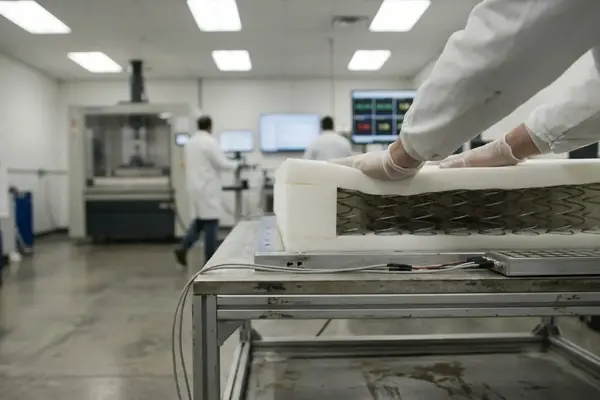





No comments.