
Cooling pillows use several distinct mechanisms: airflow, heat absorption, thermal conduction, and moisture transport. A useful comparison starts by identifying which mechanism a pillow actually provides, then matching its fill and cover to the sleeper’s position.
Contents
- The 3 AM Pillow Flip: Understanding Heat Traps
- The Illusion of “Cool to the Touch” Treatments
- Phase-Change Materials and Active Regulation
- Matching Gel Foam Fills to Sleep Positions
- Breathable Textiles and Moisture Wicking
- The Side-Sleeper Night Sweat Protocol
The 3 AM Pillow Flip: Understanding Heat Traps
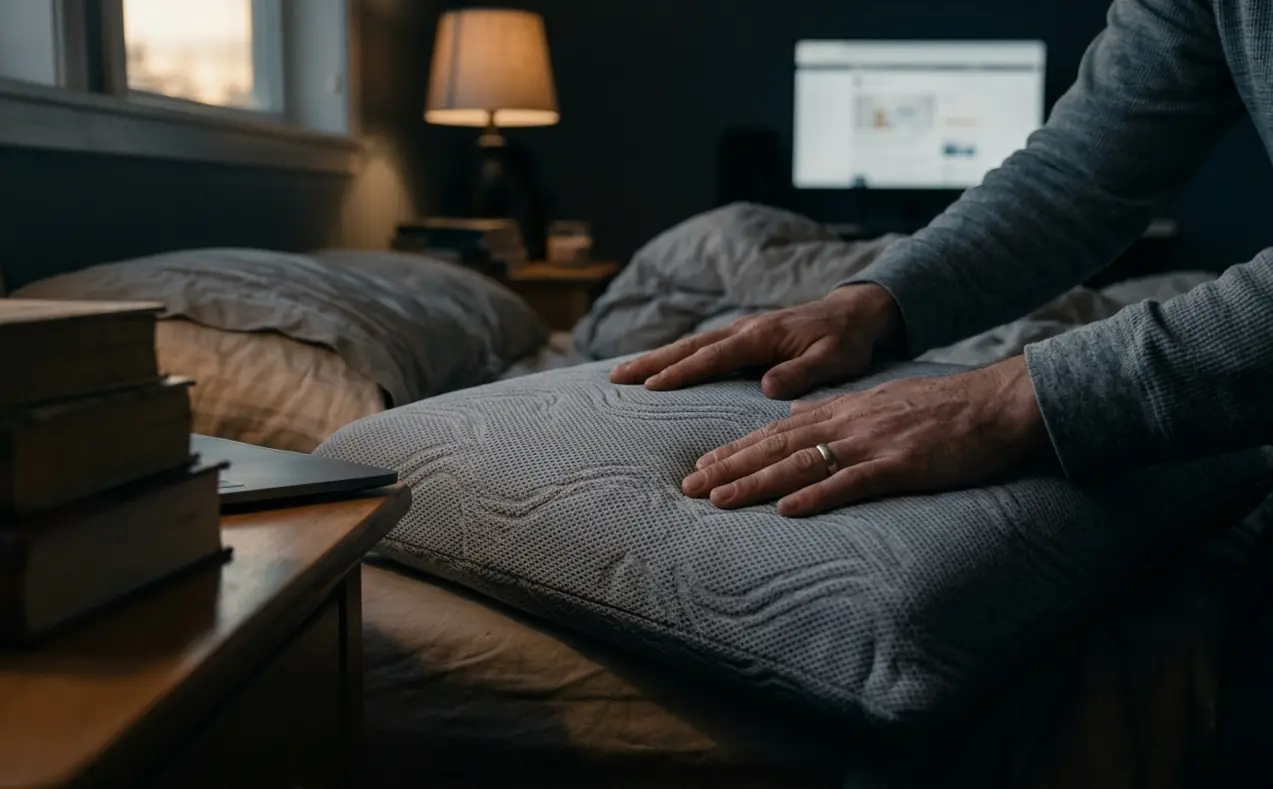
You wake at 3 AM with a damp neck and one cheek pressed into warm foam. The familiar response is immediate: flip the pillow, settle onto the cooler side, and hope the relief lasts. A few minutes later, that side feels warm too.
This cycle starts inside traditional memory foam. Its dense cellular structure limits the free movement of air through the pillow. At the same time, the foam uses body heat to soften and contour around the head and neck. The close fit supports pressure distribution, but it also creates a pocket where thermal energy accumulates near the skin.
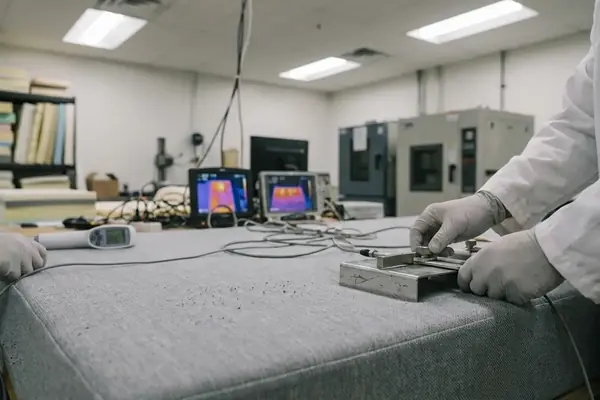
Infrared mapping over a full sleep cycle makes this heat pattern easy to see. Dense foam develops a concentrated warm area beneath the head, while regions beyond direct contact stay cooler. Flipping the pillow moves the sleeper to one of those unused regions. Once body contact resumes, the same warming process begins again.
Four Cooling Jobs
A pillow can manage that heat in four practical ways:
- Ventilation gives warm air a route out of the foam.
- Thermal conduction spreads heat away from the point of contact.
- Phase-change regulation absorbs an initial rise in temperature.
- Moisture transport moves perspiration away from the skin so it can evaporate.
The mattress also changes the result. A deeply contouring bed, including a Loom and Leaf mattress or a similar memory foam design, can increase the amount of the shoulder that sinks below the pillow. That position may restrict airflow around the pillow’s lower edge. Pillow cooling therefore needs to work alongside the sleeper’s mattress depth and alignment.
Research examining the thermal environment on sleep also supports treating temperature as part of the sleep setup rather than a cosmetic comfort feature. The goal is sustained heat and moisture management across the night.
The Illusion of “Cool to the Touch” Treatments
An icy first touch tells you how a surface behaves at first contact. It does not establish how the pillow will handle hours of body heat.
Retail demonstrations favor materials that pull heat quickly from a hand. That transfer creates an immediate cold sensation, which is known as initial thermal conductivity. A thin gel coating or topical cooling treatment can perform well during this brief test because the surface begins below skin temperature.
Sustained heat dissipation asks a harder question: where does the transferred heat go next?
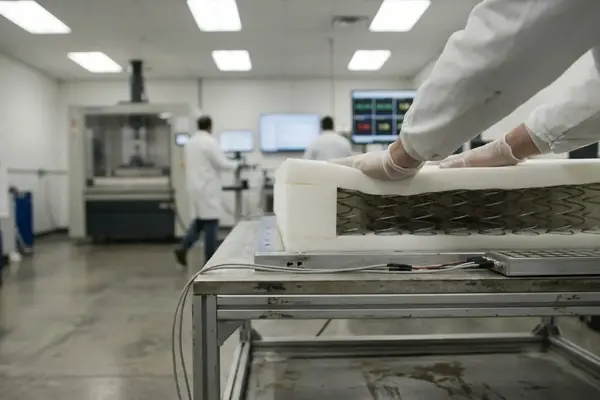
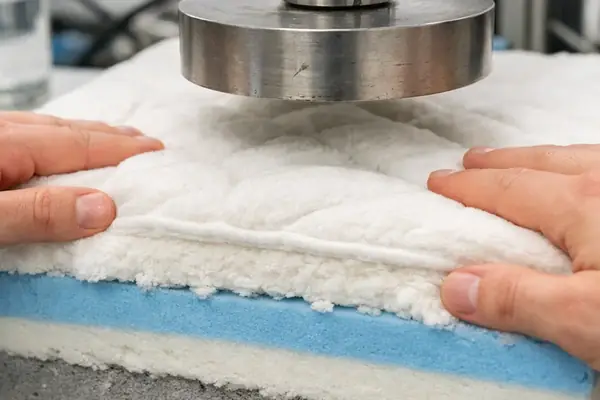
Product testers examine this by holding heated sensor pads against the pillow instead of tapping the surface for a moment. As a topical treatment warms, the temperature difference between skin and fabric narrows. The cooling sensation then fades unless the pillow can spread, absorb, or exhaust the incoming heat.
Surface-Cooling Trap: Terms such as “instant freeze,” “ice touch,” and “cooling finish” may describe initial feel alone. Check the material tag and construction details for ventilated foam, phase-change material, gel-infused memory foam, or an open mesh panel.
Read the Construction, Not the Adjective
Start with the core description. Punched ventilation channels indicate a physical path for air. Shredded foam creates connected gaps between pieces. A named phase-change layer identifies a heat-absorbing component. By comparison, phrases such as “cooling comfort” reveal little about the underlying construction.
Next, inspect whether the cooling feature sits on one side or surrounds the full pillow. A single treated panel can still be useful when the pillow has a clearly marked sleeping surface. A reversible pillow needs equally clear information about the material on each face.
Finally, look at the care label. A removable cover makes it easier to wash away skin oils and residue that can obstruct a fabric’s moisture-spreading surface. It also reveals whether the advertised cooling component belongs to the washable cover or the foam core.
Phase-Change Materials and Active Regulation
Phase-change materials, usually shortened to PCMs, act as temporary heat reservoirs. Manufacturers seal the material inside microscopic capsules and place those capsules in a pillow cover, a surface panel, or the upper portion of a foam core.
As the sleeping surface warms, the PCM absorbs thermal energy and changes from a solid state to a liquid state inside each capsule. The capsule remains intact; the phase change happens within it. This process slows the temperature rise at the contact area and can soften the first heat spike after the sleeper settles onto the pillow.

Placement Changes the Experience
A PCM panel in the cover responds close to the skin. This placement makes the initial effect easier to feel and allows manufacturers to concentrate the material on the primary sleeping side. PCM infused into the upper foam layer sits farther from the skin, yet it can distribute the heat-absorbing material across a broader contact zone.
The capsule structure affects comfort too. Material engineers have explored larger microcapsules as a way to hold more phase-change material. That approach can make the foam surface feel coarse or uneven, so practical designs balance heat capacity against the texture beneath the sleeper’s face.
PCM Reset Point: Every phase-change layer has a thermal saturation point. Once its capsules have absorbed their available heat load, active cooling pauses. Shifting the head to a fresh zone gives the warmed area an opportunity to release heat and reset.
This limitation matters for shoppers expecting a continuously cold pillow. PCM performs best as a regulator of temperature spikes. Ventilation and moisture-wicking textiles must handle the heat and perspiration that continue after the phase-change layer reaches saturation.
Copper-infused memory foam operates through a different material approach. Copper particles can alter how heat spreads within the foam, while PCM absorbs heat through a reversible change of state. A product may contain both, but the label should identify each component separately.
Matching Gel Foam Fills to Sleep Positions
Cooling performance means little if the pillow bends the neck out of alignment. Fill structure should follow the sleeper’s position first, with gel and ventilation added to the appropriate shape.
Shredded Foam for Adjustable Loft
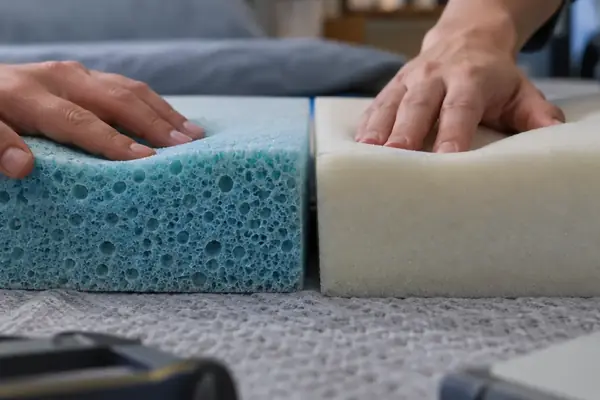
Shredded gel-infused memory foam contains many small pieces rather than one molded block. Air can move through the spaces between those pieces, and the sleeper can usually remove fill to change the pillow’s height.
That adjustability suits many back sleepers. They can reduce the fill until the head rests without being pushed toward the chest. Stomach sleepers generally need an even lower profile, so a removable-fill design gives them a practical way to flatten the pillow while retaining some cushioning.
The required amount of shredded foam changes with shoulder width and mattress sinkage. A sleeper who settles deeply into a soft mattress may need less loft because the torso sits closer to the pillow surface. On a firmer bed, the same sleeper may need more fill to bridge the space under the neck.
Ventilated Blocks for Side Support
A solid gel-foam block holds its shape more consistently. That stability helps a side sleeper fill the gap between the mattress and the head without the foam migrating away from the neck during the night.
Small punched channels run vertically through better-ventilated blocks. They create exhaust paths for warm air while leaving enough foam intact to support the head. The benefit depends on keeping the channel openings clear. A dense, non-breathable cover can restrict them.
Loft Before Labels: Lie on your usual mattress and check whether the nose stays in line with the center of the chest. Adjust shredded fill or choose a different block height before comparing gel, copper, or PCM features.
Cooling Pillow Evaluation Protocol
- Verify structural cooling through punched ventilation channels or separated shredded foam.
- Confirm that the loft suits the sleeper’s position and mattress sinkage.
- Locate the gel or PCM layer and identify which side should face upward.
- Check that the outer casing uses moisture-wicking fibers or an open mesh weave.
- Make sure the removable cover does not seal the foam’s ventilation openings.
Breathable Textiles and Moisture Wicking
A solid gel-infused memory foam core can still sleep warm when a tightly woven, high-weight cotton cover traps moisture against the face. The core may contain ventilation channels, yet the sleeper experiences clammy fabric because the outer casing cannot spread perspiration efficiently.
The cover forms the first contact layer, so its main cooling job is moisture management. Textile developers assess suitable weaves in humid test environments, paying close attention to capillary action. This is the movement of liquid through narrow spaces between fibers.
When a fabric wicks effectively, it pulls sweat away from the skin and distributes it across a larger area. The broader, thinner moisture layer can evaporate more readily than a concentrated damp patch beneath the cheek.
Lyocell, Bamboo-Derived Rayon, and Mesh
Tencel, a branded form of lyocell, commonly appears in cooling pillow covers because its fiber structure supports moisture transport and a smooth surface. Bamboo-derived rayon can serve a similar role, though the finished weave matters more than the plant named on the package. A dense weave may still restrict airflow.
Specialized open-cell mesh takes a more direct approach. Its visible openings encourage air exchange around the foam and help preserve access to punched ventilation channels. Mesh panels work especially well along the pillow’s side walls, where compression from the head is lower.
Compare the full casing rather than focusing on one featured panel. Some covers combine a smooth lyocell sleeping surface with mesh around the perimeter. That pairing gives perspiration a path across the top and warm air a route through the sides.
Wash care matters here. Fabric softeners can leave a coating on fibers and interfere with moisture movement. Follow the cover’s care instructions, close any zipper before washing, and dry it completely before putting it back over the foam.
The Side-Sleeper Night Sweat Protocol
Consider a side sleeper with broad shoulders, a contouring memory foam mattress, and heavy perspiration around the neck. A low shredded pillow collapses during the night, while a solid pillow in a dense cotton case leaves the sleeping surface damp. Here is a complete replacement setup.
- Choose the support structure. Start with a solid gel-infused memory foam core tall enough to fill the space between the outside shoulder and the head. Check alignment while lying on the actual mattress, since mattress sinkage reduces the required pillow height.
- Confirm vertical ventilation. Select a block with punched channels running through the foam. Inspect the pillow with its cover removed so the holes can be seen on both faces. This confirms that the channels pass through the core instead of appearing as shallow surface dimples.
- Place PCM toward the sleeper. Use a cover or upper foam layer with a phase-change panel on the primary sleeping side. Marked arrows, labels, or a distinct panel texture should make the orientation clear. The PCM absorbs the initial temperature rise as the cheek and neck settle into place.
- Add a moisture-spreading cover. Fit a removable lyocell or bamboo-derived rayon cover with open mesh around the edges. Keep the side mesh aligned with the foam’s exhaust routes and avoid adding a tightly woven protector over it.
- Use the pillowcase as the final layer. Choose a breathable case that fits without compressing the pillow. Excessively tight fabric can narrow the ventilation openings and round the supportive edge needed beneath the neck.
- Run a morning inspection. After the first night, note where dampness appears. Moisture concentrated on the cheek calls for better surface wicking. Dampness around the lower edge suggests blocked side airflow. If the head tilts upward, reduce pillow height; if it drops toward the mattress, select a taller solid core.
Copy This Setup: Pair one ventilated solid gel-foam block with a PCM sleeping panel, a removable lyocell top, and open mesh side walls. Place the marked PCM face upward, align the mesh with the core’s ventilation channels, add a loose breathable pillowcase, and verify straight head-to-chest alignment while lying on the contouring mattress.


No comments.