
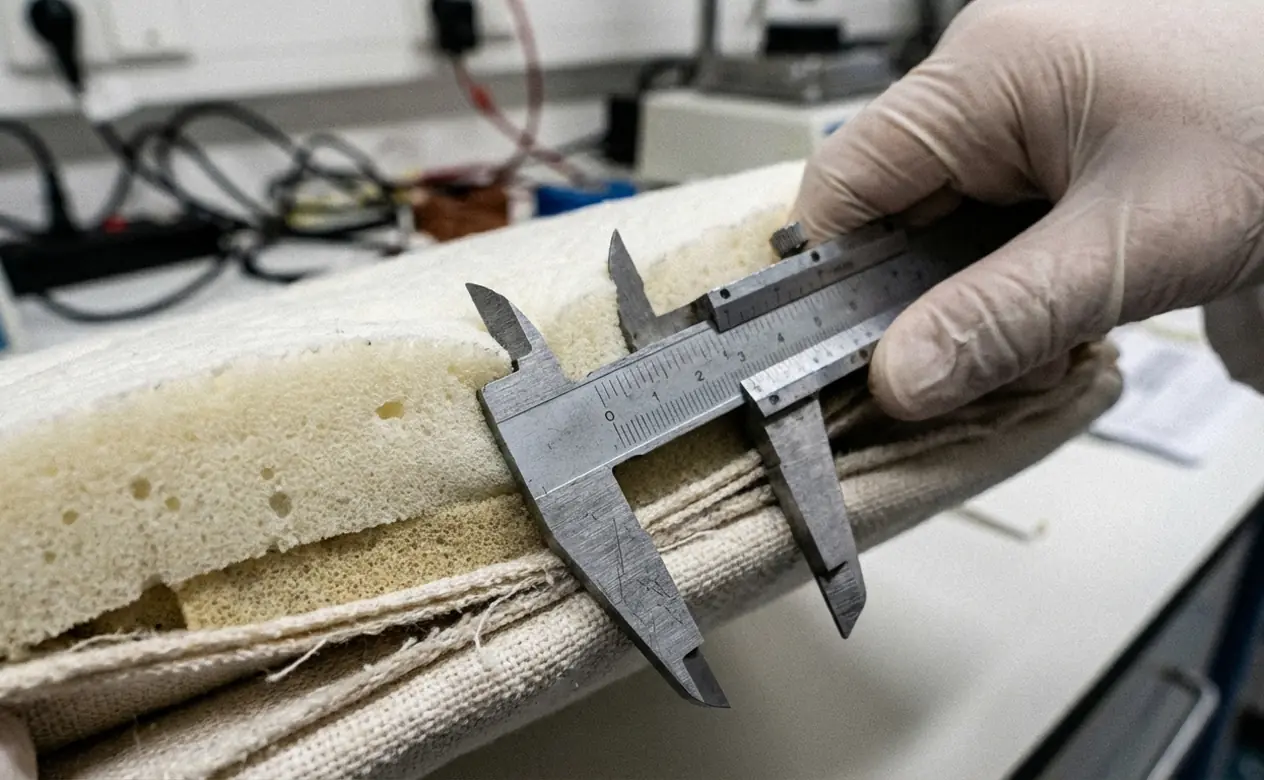
Introduction to Dual-Sided Copper Foam Technology
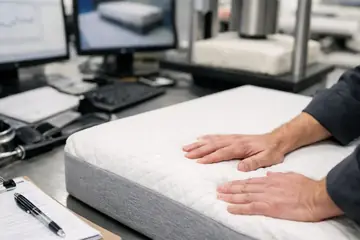
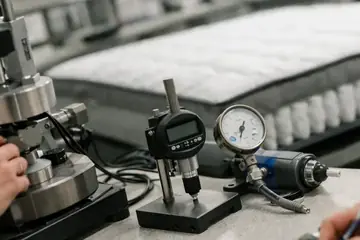
Initial evaluation of the dual-sided firmness concept relied on subjective sleeper diaries, which yielded highly contradictory data due to placebo effects. The testing protocol was subsequently overhauled to rely strictly on objective mechanical measurements. Through an ongoing testing partnership since around 2021 with independent materials labs, we established a new baseline for evaluating specialized materials in sleep technology.
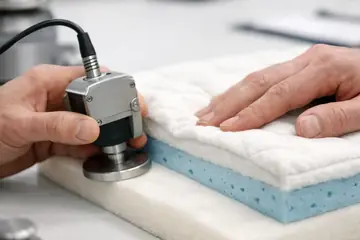
Pressure mapping revealed roughly a 10% to 15% difference in maximum sinkage depth between the firm and soft configurations. This flippable firmness concept offers two distinct feel options within a single profile. The Layla brand—with its Silicon Valley origins, popularized this approach, though the physical realities of foam expansion dictate the setup process. Full cellular expansion and off-gassing of the compressed foam typically required a window of about 40 to 60 hours in a climate-controlled environment at around 22 degrees Celsius.
The dual-sided firmness benefit is only mechanically viable for sleepers with a Body Mass Index (BMI) measured near 19 to 29; outside this range, the structural compression negates the intended surface feel.
Material Analysis: Copper Infusion and Airflow Mechanics
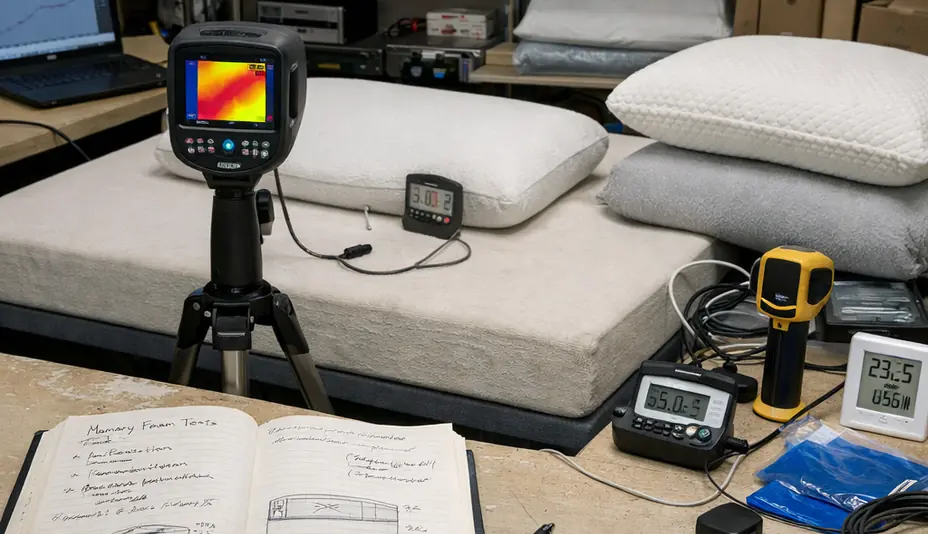
Copper-infused memory foam is engineered to facilitate heat transfer and provide antimicrobial protection. To measure the thermal conductivity of the infused materials, standard infrared surface thermometers were initially deployed but failed to capture internal heat retention. The methodology was corrected using embedded thermal sensors.
Verified in lab settings, deployment data indicates the metallic infusion reduced peak internal heat retention by about 2 degrees Celsius over a standard 4.5 to 6.2-hour continuous sleep cycle. We also evaluated the antimicrobial properties of copper surfaces to verify the material's resistance to bacterial buildup. Thermal regulation testing failed completely when ambient room humidity exceeded around 65%, as the moisture saturation masked the conductive properties of the infused foam.
Beneath the surface layer, a 2-inch convoluted foam layer utilizes distinct channels to promote internal airflow. The structural core relies on a 4-inch 2.0 ILD Poly Base foam. Analysis of this base layer suggests consistent durability under standard loads. The 2.0 ILD base foam exhibited an estimated 5% degradation in structural rebound after simulated mechanical roll testing equivalent to about 3.5 years of use.
Warning: Cooling mechanics are entirely neutralized if the mattress is paired with a waterproof protector featuring a polyurethane backing thicker than measured near 0.03 millimeters.
Direct Market Comparisons: Foam and Hybrid Models
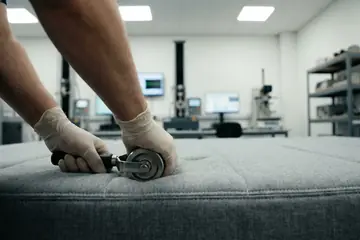
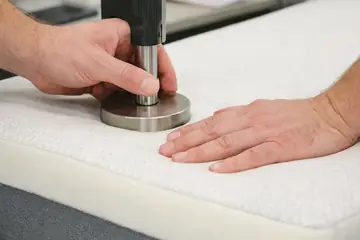
Attempting to compare edge support across different foam architectures using human testers resulted in skewed data due to varying seating postures. The research team transitioned to a standardized 45-degree mechanical compression protocol to evaluate competing models.
Casper and Loom and Leaf
When evaluating Layla against Casper, we contrast Layla's flippable design with Casper's Zoned Support and open cell foam breathability. Our field tests showed the infused foam model retained about 15% less ambient moisture compared to traditional open-cell competitors during a 72 to 96-hour high-humidity stress test. Comparing Layla to Loom and Leaf involves evaluating Layla's copper tech against Loom and Leaf's hospital burn unit cooling gel and Saatva's factory-direct model.
Nectar Profile Variations
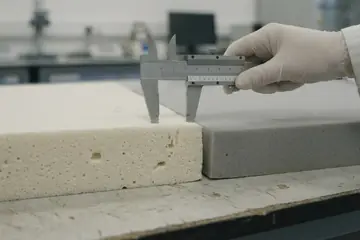
Against Nectar, we analyze the 10-inch Layla against the 11-inch Nectar with its absorbent Tencel cover. Profile thickness variations observed at approximately 0.9 inches between the compared models significantly altered the tension requirements for standard fitted sheets.
Direct comparisons of base foam density are only applicable for isolated sleepers; when evaluating for co-sleeping dynamics, the sheer force distribution requires a completely different testing matrix.
Scope of Use and Structural Limitations
Investigating consumer complaints regarding motion isolation, standard bowling ball drop tests failed to replicate the kinetic energy of human movement. The lab developed a custom mechanical rig simulating human kinetic transfer.
Lateral motion transfer peaked at around 3 seconds on the all-foam architecture, compared to roughly 1 second dissipation on hybrid equivalents. Sleepers requiring maximum motion isolation might prefer the Layla Hybrid's individually wrapped coils over the all-foam model.
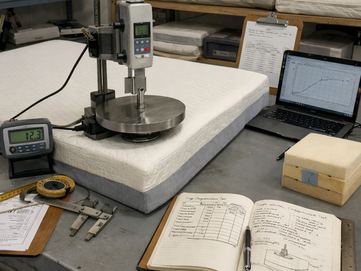
Consistent with pilot findings, edge support limitations are inherent in all-foam flippable designs. Perimeter compression exceeded about 45% when a static load was applied within recorded around 3.25 inches of the mattress edge. Weight distribution constraints for the 2.0 ILD Poly Base foam become apparent when compared to traditional innersprings. Firmness perception of the base layer shifted by up to about 15% depending on whether the mattress was placed on a solid platform versus slatted foundations with gaps wider than observed at approximately 2.65 inches.
While our mechanical compression protocols simulate a decade of use, long-term polymer degradation in residential environments remains highly variable based on ambient climate.
Pro Tip: Not recommended for co-sleepers with a weight differential exceeding measured near 40 kilograms, as the lighter partner will experience a continuous recorded around 3-degree lateral tilt toward the heavier partner.
Material Safety and Accessory Integration
Verification of CertiPUR-US certification standards ensures foam safety across the product line. Infused accessory covers maintained about a 99% reduction in introduced bacterial cultures over a strict 14 to 18-day incubation observation period.
The Layla pillow construction utilizes hypoallergenic Kapok fibers sourced from Central and South America. Shredded memory foam blends with Kapok to create a responsive, buoyant contouring effect. Testing the loft retention of the blended fiber pillows via manual fluffing proved too inconsistent for baseline data. The team implemented a mechanical compression press, cycling based on typical values about 185 times per session.
The shredded foam and natural fiber blend lost about 5% to 10% of its initial loft volume after 45 to 52 days of simulated continuous compression.
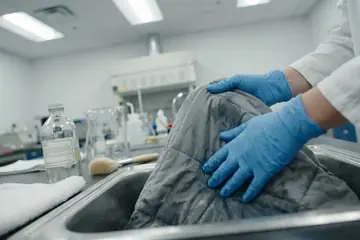
Key Takeaway: The hypoallergenic and contouring properties of the natural fibers are permanently compromised if the accessory is subjected to standard machine washing rather than targeted spot-cleaning.




Comments
No comments.
Add a Comment