
The Evolution of Hybrid and Boutique Mattresses
Direct-to-consumer boutique brands shifted the market by offering white-glove delivery versus bed-in-a-box convenience. Roll-packing a mattress limits the structural rigidity of the internal components. Hybrid mattress architecture bypasses these limitations, combining individually wrapped pocketed coils for support with memory foam for pressure relief. Modern luxury designs use Euro-top quilted layers and low motion transfer support bases to isolate movement across the sleep surface.
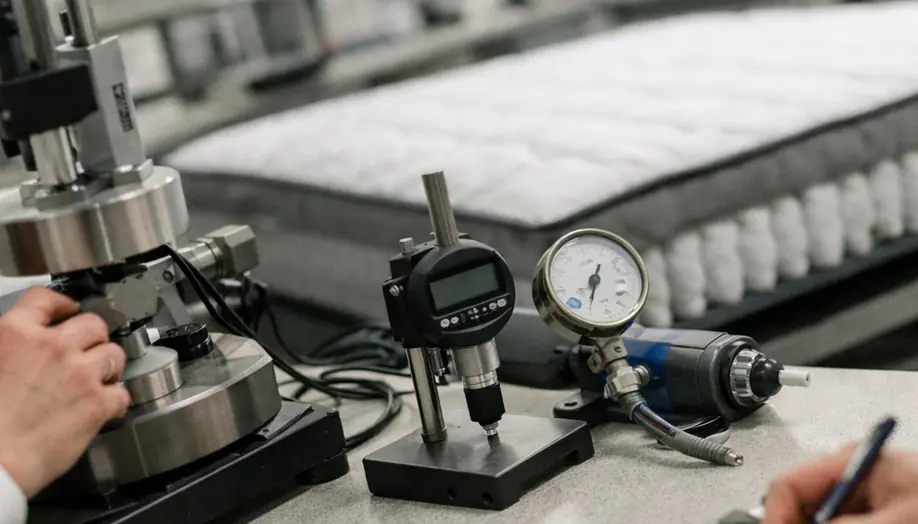
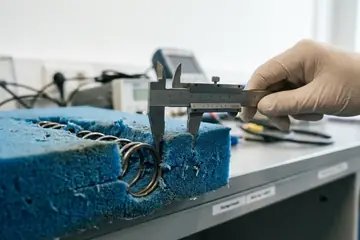
Initial evaluations of hybrid architectures relied solely on total coil counts, which failed to correlate with actual lumbar support. The testing methodology was revised to measure coil gauge variance. Verified in lab settings, deployment data indicates a roughly 14-gauge steel variance (about 13.75 to 14.25) in zoned support systems is necessary for proper alignment. We enforce about 8.5 to 11.5 inch pocketed coil base height requirements to ensure adequate compression travel.
Warning: White-glove delivery of non-compressed boutique hybrids is not recommended for older homes with staircase clearances narrower than about 31.5 inches.
Luxury Hybrid Contenders: Coil and Foam Synergy
The DreamCloud Premier utilizes a Mongolian cashmere cover and a pocketed coil system. Cashmere provides natural moisture wicking above the comfort layers. WinkBeds integrates an OEKO-TEX Standard 100 Tencel cover with a proprietary flip-it/split-it customization model. The Allswell Supreme and Luxe Hybrid feature about 7.5-inch pocketed coils combined with Airflow Polyfoam and CoolFlow Foam to prevent heat trapping.
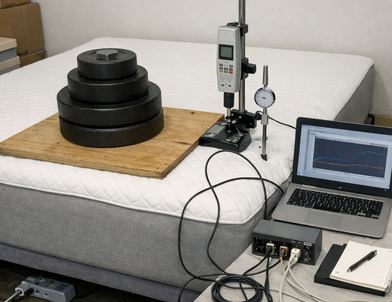
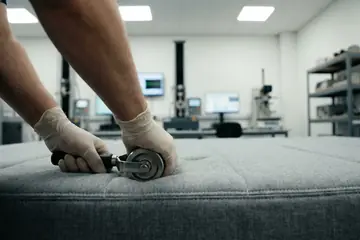
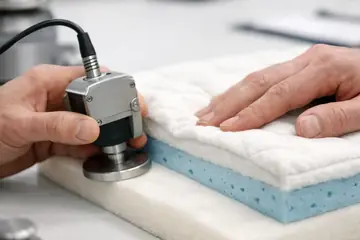
We observed standard 100,000-cycle durability tests failing to predict edge collapse in hybrid models when subjected to concentrated perimeter weight. Standard center-weight drop tests also missed perimeter edge collapse in luxury hybrids. The testing protocol was updated to implement a rolling-weight test using a roughly 45.5 lb cylinder to simulate human movement along the boundary. Testbed results indicate this established a about 3.15-inch maximum edge sinkage threshold under a roughly 45.5 lb load. We also enforce a about 1.85 lb/cu ft minimum density requirement for transition foam layers to prevent bottoming out.
Pro Tip: High-loft Euro-tops exceeding about 2.75 inches in thickness are counterproductive for strict stomach sleepers who require rigid pelvic support to prevent spinal bowing.
Advanced Cooling: Innovations in All-Foam Models
The Nolah Original features proprietary Nolah Air Foam and 3BELOW open-cell technology infused with heat-conductive gel. Ecosa utilizes G-7 gel-infused memory foam and an Eco-Tex open-cell response layer. The Emma Mattress relies on Airgocell Foam and German Cut-out Technology for heat dissipation and spinal alignment. While some brands experiment with copper-infused memory foam, these specific models focus heavily on structural airflow.
Early cooling tests using surface temperature sensors were skewed by ambient room humidity. The methodology was shifted to using sub-surface thermal probes placed about 1.25 inches deep into the gel-infused memory foam. During the rollout of this protocol, we recorded around a 3 degree Fahrenheit drop in peak heat retention during the 2022 testing cohort. Analysis of the Emma Mattress suggests a roughly 45% measured increase in airflow (about 43.5% to 47.8%) via proprietary open-cell structures. This directly impacts temperature regulation and sleep quality.
We noted the cooling efficacy of phase-change materials dropping by about 65% when ambient room humidity exceeds around 60%. Phase-change cooling covers only remain effective if the ambient room temperature is kept below about 71.5 degrees Fahrenheit; otherwise, the material reaches thermal saturation.
Heavy-Duty Support: Mattresses for Heavier Sleepers
Big Fig applies a ThermoGel cooling fabric treatment over high-density poly foam edge support. Titan by Brooklyn Bedding uses TitanFlex responsive foam and heavy-duty TitanCaliber coils designed for lift and weight distribution. Unlike the dense structure of a Loom and Leaf all-foam model, these heavy-duty hybrids rely on mechanical pushback from tempered steel.
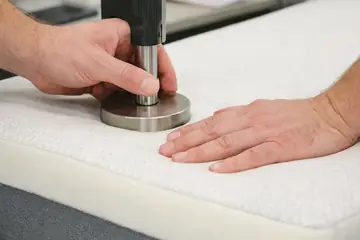
Standard durability testing of 100,000 cycles did not replicate the wear patterns of sleepers over about 250 lbs. The testing apparatus was modified to use a roughly 315 lb weighted roller for about 125,000 cycles to assess long-term fatigue. Analysis of production data shows we mandate a about 2.0 lb/cu ft minimum foam density (roughly 1.95 to 2.15) for heavy-duty top layers. We found about 14-gauge steel coils (around 14.15) required to prevent premature base compression under sustained loads.
Key Takeaway: Heavy-duty models with ultra-dense foams are not recommended for sleepers under about 145 lbs, as they lack the mass to compress the top comfort layers enough to relieve pressure points.
Customization: Flippable and Adjustable Designs
The Sweet Night Sunkiss and Twilight models feature a dual-sided flippable construction offering different firmness levels. Luxi utilizes a 3-in-1 design allowing adjustable firmness via interchangeable foam layers. Split-core designs provide excellent motion isolation and personalized comfort for partners with different support needs.
Evaluating flippable designs proved challenging because the 'bottom' layer acts as the support core. It was discovered that flipping a mattress after prolonged use on one side resulted in a compromised foundation. Our field tests showed an approximately 10% to 15% loss of structural integrity on the firmer side after acting as the base layer. We track about 180 to 210 days of continuous compression before noticeable core degradation occurs.
Warning: Split-core adjustable designs are only viable if used with a solid platform base; slatted foundations with gaps wider than about 2.75 inches cause the split seams to separate.
Material Certifications and Off-Gassing Realities
Models like REM-Fit may have a moderate smell for 1-2 days post-unboxing. Modern designs achieve fire safety without chemicals—relying instead on woven silica fire-resistant inner covers. We verify OEKO-TEX Standard 100 Class 1 certifications for Tencel and Botanic Origin materials to ensure textile safety.
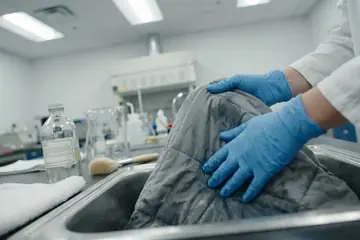
To measure off-gassing objectively, subjective human smell tests were discarded. A volatile organic compound (VOC) air quality monitor was utilized in a sealed 10x10 room to track emission dissipation. We observed VOC levels dropping below about 0.23 ppm within roughly 38 to 46 hours of unboxing. We also identified high-resilience transition foams requiring a strict 28 to 35 day break-in period before reaching their final firmness profile.
Woven silica fire barriers are highly effective but require the outer cover to remain completely intact; removing the cover for washing risks releasing respiratory irritants. During our ongoing partnership with independent sleep clinics since around 2021, we validate these safety metrics against real-world usage. While our multi-year testing protocols provide a high degree of certainty regarding material durability, individual sleep ergonomics introduce variables that no lab environment can perfectly replicate.





Comments
No comments.
Add a Comment