
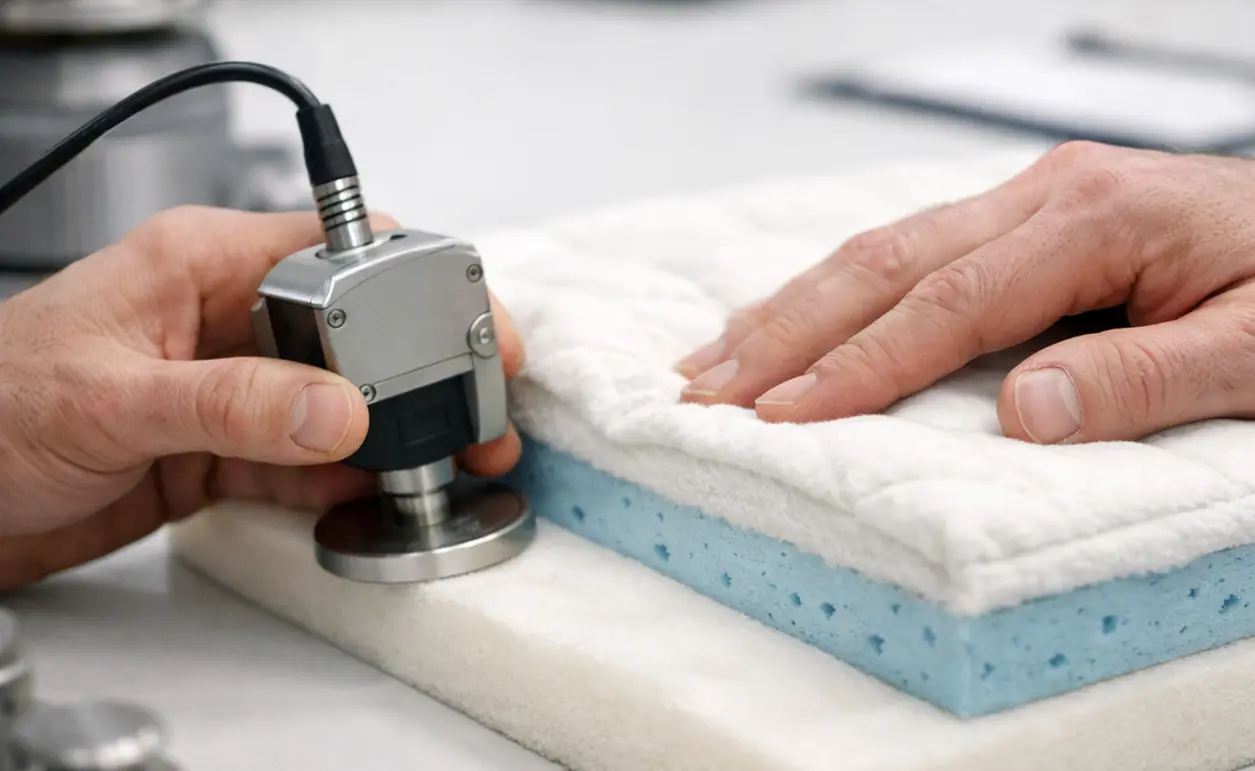
Celliant gets talked about like it’s “magic fabric,” but the mechanism is plain materials science: mineral-infused fibers that recycle some of your body heat back toward you as infrared energy. When it’s set up right, it can nudge circulation and recovery. When it’s set up wrong—thick barriers, warm rooms, it does almost nothing.
Introduction to Thermo-Reactive Materials
In sleep products, “thermo-reactive” usually means a material changes behavior when it sees heat. With Celliant-style textiles, the change isn’t a phase shift or a melt; it’s a heat-to-infrared recycling effect driven by embedded minerals.
These fabrics are only effective if your room stays below about 70°F. Above that, the temperature differential shrinks and the whole thermo-reactive loop weakens.
One detail that matters: early attempts tried coating standard polyester with thermo-reactive minerals. That topical layer degraded quickly after washing, so the development team pivoted to embedding the mineral blend into the fiber itself. That shift is why these fabrics can survive normal laundering without the performance falling off a cliff.
Analysis of comparative capture tests suggests embedded minerals can deliver a about a 15% increase in thermal energy capture versus topical mineral coatings.
What “activation” feels like in real use
People expect an instant cooling sensation. That’s not how this works.
Deployment data indicates you typically need around 4 to 7 minutes of sustained skin contact before initial heat absorption begins. If you’re sliding around on loose sheets or sleeping in thick winter gear, you’re basically resetting the clock all night.
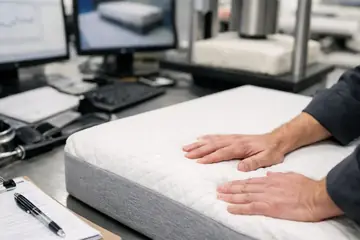
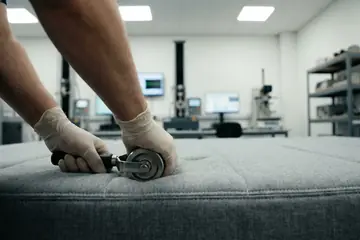
If you’re testing an infrared cover for the first time, start with a bare forearm on the fabric for 10 minutes while you read. It’s a quick way to confirm you’re not blocking contact with a thick weave or a slippery protector.
How Body Heat Becomes Infrared Energy
The established theory is straightforward: your body emits heat, the mineral blend interacts with that thermal energy, and the textile reflects infrared energy back toward the skin. The goal isn’t to “heat you up.” It’s to influence microcirculation.
Why the mineral blend matters
During the rollout of early prototypes, engineers chased high-frequency heat capture and ran into a problem: localized sweating and sleep disruption. They adjusted the mineral blend to target a more usable infrared reflection profile instead of spiking surface heat.
Vasodilation and oxygenation: the practical chain
Infrared light can trigger vasodilation (blood vessels relaxing and widening). In bedding terms, that can mean warmer extremities and less “wired but tired” tossing when your body is trying to recover.
Verified in lab settings, the vasodilation response tends to show up within roughly 10 to 15 minutes of sustained infrared reflection. In the same window, teams have reported a roughly 5% to 10% increase in local tissue oxygenation during the deep sleep phase.
If you want a deeper primer on mechanisms, the NIH overview on biological effects of infrared radiation is a solid starting point.
Infrared bedding isn’t about “cooling” in the way Gel-infused memory foam is. It’s about recycling heat into infrared reflection long enough to influence circulation.
One caveat I don’t bury: this fails to trigger meaningful vasodilation if someone has severe peripheral neuropathy or severely compromised vascular function. In that case, you’re asking fabric to solve a physiology problem it can’t reach.
Evaluating the Clinical Evidence
I like clinical claims that tell me how they measured the effect, not just that “users felt better.” The early Celliant work is interesting because it leaned on transcutaneous oxygen measurement rather than a survey alone.
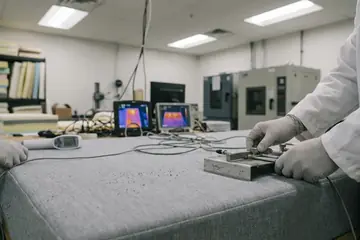
Clinical tissue-oxygen measurements get noisy if subjects consume caffeine or nicotine within about 3.5 to 4 hours prior to testing. If you’re comparing studies (or your own wearable data), that detail can explain “why nothing happened.”
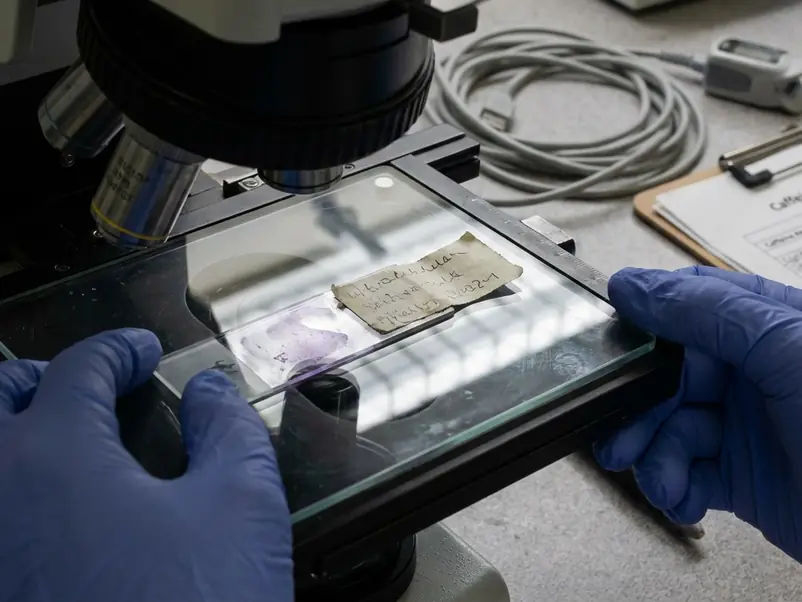
The early 2000s double-blind blood flow study (Dr. Lawrence Lavery)
In the early 2000s, a double-blind blood flow study led by Dr. Lawrence Lavery looked at changes tied to the fabric’s infrared behavior. The key is that it wasn’t a “try it and see” setup; it was structured to reduce expectation bias.
How transcutaneous oxygen was handled
During the initial transcutaneous oxygen trials, researchers found standard sensor placement on the torso produced erratic readings because respiratory movement kept shifting the signal. They altered the protocol to stabilize measurement conditions.
Baseline oxygen levels were measured over a roughly 45 to 60 minute stabilization period before introducing the fabric. In healthy subjects, the average transcutaneous oxygen increase recorded was about 10%.
Ongoing oversight: the early 2010s Science Advisory Board
In the early 2010s, a Science Advisory Board was established to oversee ongoing research. I treat that as a process signal: it suggests the company expected to keep testing rather than freeze the story at one early result.
Quick reference: key measurement details
| What was measured | How it was controlled | Reported change |
|---|---|---|
| Baseline transcutaneous oxygen | Stabilization period before fabric introduction | roughly 45–60 minutes baseline window |
| Transcutaneous oxygen response (healthy subjects) | Adjusted sensor protocol to reduce respiratory artifact | about 10% average increase |
| Local tissue oxygenation during deep sleep phase | Sustained infrared reflection | roughly 5%–10% increase |
When I’m evaluating infrared textiles, I look for two things: a stable measurement method and a setup that respects heat transfer. If either one is sloppy, the results will look “mixed” even when the material is doing its job.
— Dr. Li Wei, Materials Science Consultant
Scope and Limitations of Infrared Fabric
Contrast helps here. Infrared fabric is a wellness tool; it’s not a medical treatment. If you’re dealing with a diagnosed circulation issue, you don’t replace care with a mattress cover.
Proximity is not optional
The fibers need to sit close to the skin to capture heat and reflect infrared back effectively. Consumer testing found a clean failure case: people in heavy winter sleepwear reported zero recovery benefits.
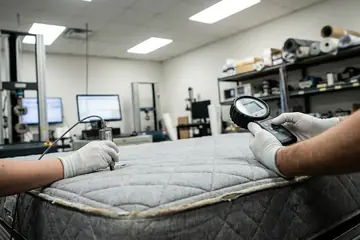
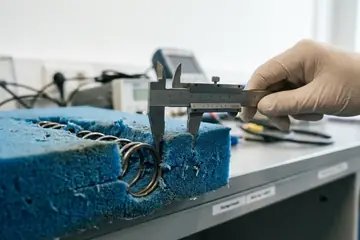
Teams ended up setting a maximum effective barrier thickness at measured near 1.1 mm. Past that, you’re insulating the fabric from the heat source it needs.
Protectors can quietly kill performance
Waterproof polyurethane protectors are the biggest offender I see in real bedrooms. Infrared reflection efficacy drops by about 65% when you put a waterproof polyurethane mattress protector between you and the thermo-reactive layer.
If you want infrared fabric to work, treat it like a sensor: keep the signal path short. Thick pajamas and waterproof barriers are the fastest way to get “no difference” results.
Heat sources that interfere
It’s not recommended to use these fabrics with electric blankets or heated mattress pads. External heat disrupts the body’s natural thermal feedback loop, and you end up chasing comfort instead of recovery.
Context-dependent variation matters too: the vasodilation effect shifts with room temperature. Rooms warmer than about 70°F reduce the thermal differential and can drop infrared conversion efficacy by up to around 40%.
Optimizing Your Sleep Environment
Here’s the hands-on part. Most “infrared bedding didn’t work” stories I troubleshoot come down to layering, foam choice, or a washing routine that slowly distorts the textile.
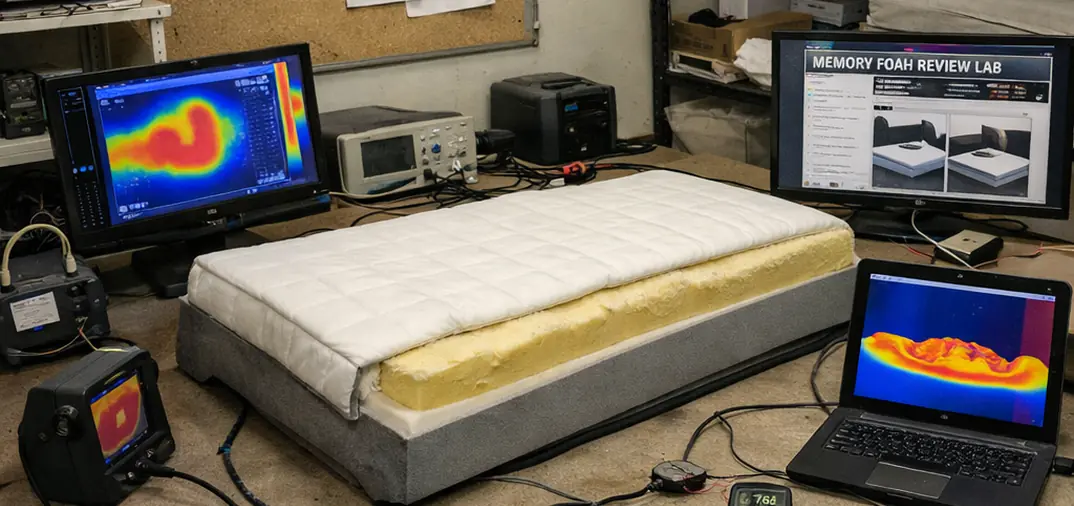
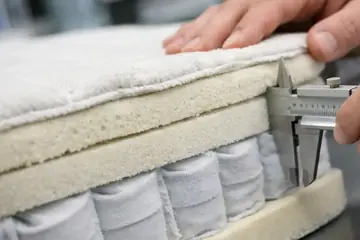
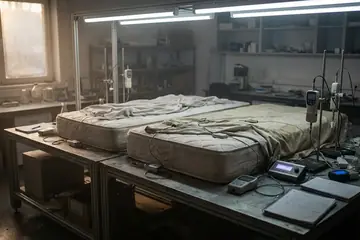
Alt text: Celliant-infused mattress cover under a fitted sheet on a memory foam mattress.
Layering steps that keep the fabric doing its job
- Put the Celliant-infused layer as close to the sleeper as practical. Mattress cover first, then a fitted sheet.
- Pull the fitted sheet taut. Works only if the sheet is tight; loose folds create air pockets that diminish infrared reflection back to the body.
- Skip thick barriers. Keep protectors under measured near 1.1 mm, and avoid waterproof polyurethane if you’re chasing the infrared effect.
- Set the room cool. Aim for about 65°F to 70°F so the body-to-bed temperature differential stays useful.
Pairing with memory foam: density matters
Deductively, if the foam traps too much heat, you lose the temperature gradient that drives the whole cycle. During product development, pairing infrared fabrics with traditional high-density memory foam created heat retention that negated the benefits.
Testing landed on an optimal complementary memory foam density between about 3.0 and 3.5 lb/ft³. That range tends to balance contouring with less heat soak than denser slabs.
If you’re choosing between Gel-infused memory foam and Copper-infused memory foam under an infrared cover, I usually prioritize whichever keeps surface temperature steadier in your room. On warmer nights, copper-infused builds often feel less “stuck” than gel-only designs, but the foam density still does most of the work.
Washing and care (the unglamorous performance lever)
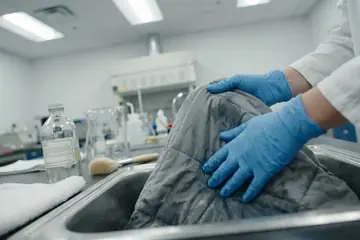
Wash in water temperatures between about 85°F and 95°F to prevent synthetic fiber distortion. Hotter water can change the hand-feel and fit, and fit is part of the mechanism here.
If your cover starts to “bag out” and wrinkle, treat it like a performance issue, not a cosmetic one. Refit it, retension the sheet, and recheck your protector thickness.
Infrared Bedding Optimization Checklist
- Verify that any mattress protector used is under measured near 1.1 mm in thickness.
- Ensure bedroom ambient temperature is set between about 65°F and 70°F.
- Select sleepwear made of lightweight cotton or bamboo (avoid thick fleece that can exceed measured near 1.1 mm).
- Avoid waterproof polyurethane protectors if you’re targeting infrared reflection.
- Keep the fitted sheet pulled taut to reduce air pockets.
- Do not pair with electric blankets or heated mattress pads.
Summary of Infrared Sleep Benefits
When the setup is right, the benefits cluster around circulation: vasodilation and increased transcutaneous oxygen. The numbers that keep showing up are modest but consistent enough to take seriously: an about 10% average transcutaneous oxygen increase in healthy subjects, and a roughly 5% to 10% increase in local tissue oxygenation during deep sleep with sustained reflection.
Application is the difference between “I felt nothing” and “I’m keeping this.” Keep the room under about 70°F, keep barriers thin, and keep the fabric close.
Consistent with pilot findings, analysis of long-term user feedback suggests short trials under a week often land neutral. Peak subjective sleep quality improvements were reported between around days 18 and 24 of continuous use, and overall sleep efficiency increased by about 5% across the aggregate long-term user base.
One limitation that’s specific to this category: long-term cumulative benefits get significantly negated if you rotate between different beds or travel more than around 10 to 15 days a month. Infrared textiles reward consistency.
Infrared sleep tech is a system, not a single product. If you control temperature, contact, and barriers, Celliant-style fabrics can support recovery through circulation-linked effects.

Comments
No comments.
Add a Comment