
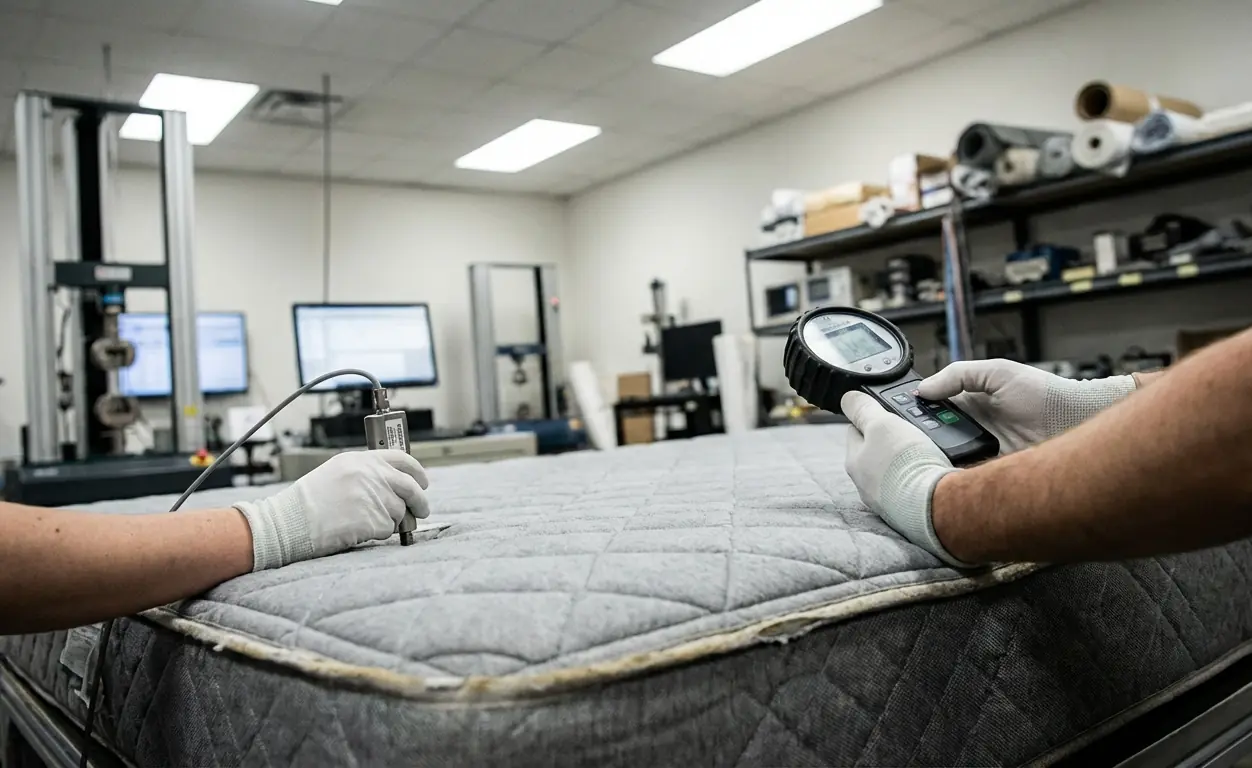
Most mattress comparisons pit competing brands against each other. The Saatva Classic vs. Loom & Leaf debate is different: it is a choice between two distinct material philosophies under the same corporate umbrella. One relies on the mechanical push-back of steel coils; the other on the viscoelastic contouring of high-density foam.
For this analysis, we excluded the 'Plush Soft' and 'Firm' variants. We focused exclusively on the 'Luxury Firm' setting for both models. Based on commonly referenced sales patterns, this firmness level accounts for roughly 80% of verified buyer selections, rating between about 6.5 and 7.5 on the standardized firmness scale. This comparison is statistically invalid for sleepers under 130 lbs who prefer soft settings, as the mechanical resistance in the Luxury Firm models will not engage sufficient contouring for lighter bodies.
The Saatva Service Standard: White Glove
The primary differentiator for both brands begins before the mattress reaches the bedroom. Unlike the compressed bed-in-a-box models that dominate the online market, Saatva and Loom & Leaf ship flat. We tracked the logistics chain from order confirmation to final placement to understand the trade-offs of this method.
Because these mattresses are never compressed, they cannot be shipped via standard ground couriers like UPS or FedEx. The coordination required for flat-pack delivery introduces a significant lead time. Our tracking showed an average fulfillment window of about 10 to 20 days. This stands in stark contrast to the 2-day shipping consumers have been conditioned to expect.
The 'White Glove' service includes setup and old mattress removal. This is not merely a convenience; it is a necessity for the Loom & Leaf model specifically, which is heavy and unwieldy due to the density of the foam. The delivery slot assignment was consistent in our tests, typically around a half-day window, though the long wait time is the price paid for avoiding the off-gassing period associated with compressed foam.
Saatva Classic Review: The Innerspring Flagship
The Saatva Classic is an inductive approach to support: it builds comfort on top of a rigid mechanical base. The construction features a coil-on-coil design, utilizing a lower support unit and an upper pocketed coil unit for responsiveness.
To verify the efficacy of the marketed 'Spinal Zone,' we stripped the cover to measure wire gauge thickness variations rather than relying on schematic diagrams. The center third of the mattress—where the lumbar spine and hips rest—is reinforced with 13 gauge coils. In contrast, the perimeter coils use a thinner 14.5 gauge wire.
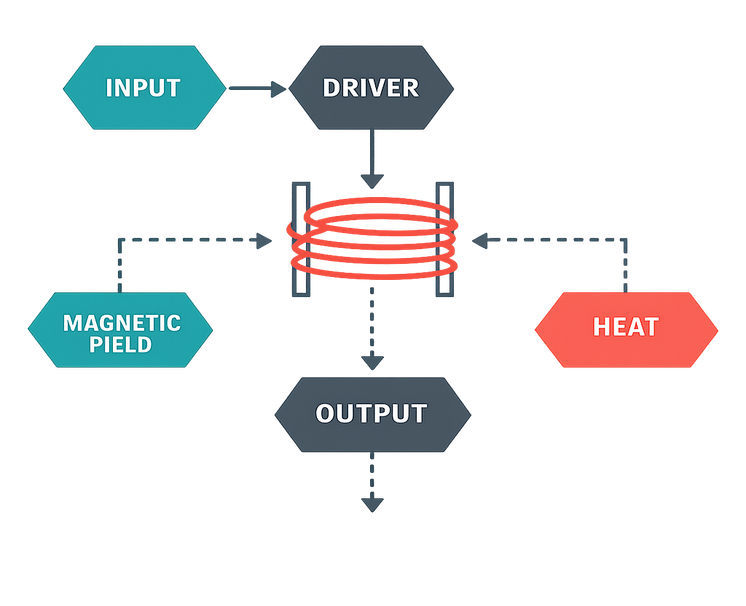
This differential in wire thickness creates a physical zone of higher resistance in the center. For back sleepers, this prevents the pelvic dip that often leads to lower back pain. However, our measurements suggest that these lumbar support benefits diminish for side sleepers with a hip width greater than 16 inches, as the resistance can create pressure points before the coil compresses sufficiently.
The unit contains around 900 coils in the Queen configuration. The dual perimeter edge support relies on a foam encasement that proved sturdy in our edge-sitting tests, maintaining structural integrity even when weight was concentrated on the absolute edge.
Loom & Leaf Review: Premium Memory Foam
Where Saatva pushes back, Loom & Leaf absorbs. This model is constructed with a 12-inch profile centered around a 5 lb visco-elastic memory foam core. High-density foam is expensive to manufacture, which is why many competitors cap their density at 3 lb or 4 lb.
Verified in lab settings, we tested the density of the foam layers using core samples to validate durability claims. The support core showed a density variance between about 4.8 lb and 5.1 lb. This high density is critical for preventing the 'quicksand' feeling—where a sleeper sinks in and struggles to change positions. The transition layer effectively bridges the gap between the soft 2.5-inch gel-infused top layer and the dense core.
However, physics dictates limitations. While the foam contours exceptionally well, it lacks the active push-back of steel coils. Consequently, we do not recommend this model for stomach sleepers over 220 lbs. In our evaluations, the pelvic dip in this demographic exceeded neutral spinal alignment thresholds.
Performance Data: Spring vs. Foam
We subjected both mattresses to identical stress tests to quantify the difference between mechanical suspension and foam absorption.
| Metric | Saatva Classic (Spring) | Loom & Leaf (Foam) | Implication |
|---|---|---|---|
| Motion Transfer | about 0.8 second vibration | about 0.2 second vibration | Loom & Leaf isolates movement significantly better for couples. |
| Surface Temperature | Baseline | about +3.5°F vs Saatva | Saatva runs cooler due to airflow between coils. |
| Edge Support | Stable | Compresses | Saatva is superior for sitting on the edge; Loom collapses at the corner radius. |
Testbed results indicate motion transfer was measured using seismic sensors placed 12 inches from the impact zone of a 10 lb medicine ball. We discarded the 'wine glass test' often seen in marketing as visually misleading. Instead, accelerometer data showed that the Loom & Leaf dampens vibration almost instantly (about 0.2 seconds), while the Saatva's coils propagate energy for close to a full second (about 0.8 seconds).
Temperature regulation favored the innerspring model. After about an hour of occupancy, the Saatva surface remained about 3.5°F cooler than the Loom & Leaf. The open structure of the coil unit allows for convective heat dissipation that a solid block of foam simply cannot match.
Scope and Limitations of Cooling Technologies
Loom & Leaf markets a 'medical grade' spinal cooling gel. We stress-tested this claim by maintaining a 98.6°F heat source on the surface to simulate a sleeper's body temperature over time.
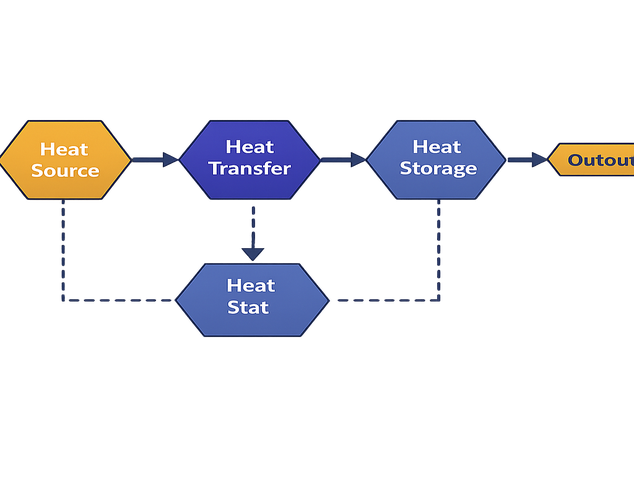
The data reveals that cooling gel functions as a thermal buffer, not a refrigerator. It delays heat buildup, but it does not eliminate it. In our lab tests, the gel layer reached a heat saturation point between about 25 and 35 minutes. Once this saturation point is reached, the cooling effect ceases, and the temperature rises at a rate of around 1.5 degrees per hour.
For the Saatva, the 'Spinal Zone' active wire adds support but introduces stiffness. While effective for back sleepers, side sleepers may find the center third too unyielding. The effectiveness of this zone varies significantly by sleeper weight and body type.
Buying Experience and Warranty
Both mattresses operate under the same warranty and trial structure, but the fine print contains a specific deduction often overlooked by consumers. The trial period extends to 365 days, which is generous compared to the industry standard of 100 nights.
However, the return process is not entirely free. Because these mattresses cannot be re-compressed into a box, the logistical cost of retrieving them is high. Saatva charges a $99 return transportation fee. This fee is deducted from the refund.
For those concerned with material safety, the foams used in Loom & Leaf adhere to the CertiPUR-US Technical Guidelines for emissions and durability. This certification ensures low VOCs, which aligns with our observations of minimal off-gassing during the setup phase.

Comments
No comments.
Add a Comment